A Parent’s Guide to Winter Wellness: Could Your Child Have Tonsillitis?
Could Your Child Have Tonsillitis? – Winter is a season of contrasts. It brings cozy evenings and festive lights, but for parents, it also ushers in “the sick season.” It’s a time of constant vigilance, stocked medicine cabinets, and the all-too-familiar sound of a nighttime cough. As parents, we arm ourselves with an arsenal of winter health tips, we preach the gospel of hand-washing, and we do everything in our power to boost immunity and prevent cold and flu.
Yet, despite our best efforts, the germs of winter can be relentless. One of the most common, painful, and worrying illnesses that strikes children during these cold months is Tonsillitis.
It often starts as a simple complaint: “My throat hurts.” But soon, you notice your child has a fever, they refuse their favorite foods, and when you look in their mouth with a flashlight, you see a raw, red, and swollen throat. The question instantly flashes in your mind: “Could my child have tonsillitis?”
This is not a question to be taken lightly. That severe sore throat could be a simple virus, or it could be a sign of a more serious bacterial infection like Strep Throat, which requires prompt medical treatment. Knowing the difference is a critical piece of your winter health tips toolkit.
This comprehensive guide is your ultimate resource. We will walk through every important symptom of tonsillitis, explore the different types of tonsillitis, and detail every tonsillitis treatment option, from home remedies to surgery. We will explain why it is so crucial to get a prompt tonsillitis diagnosis and provide actionable advice on how to prevent tonsillitis. Finally, we will explain when it’s time to see an expert, like the specialists at Medicon Multispeciality Clinic.
Could Your Child Have Tonsillitis?
Could Your Child Have Tonsillitis?
Chapter 1: The Tonsils – Your Child’s Immune Gatekeepers
Before you can understand the problem, you must understand the part of the body in question. What are tonsils, and what do they do?
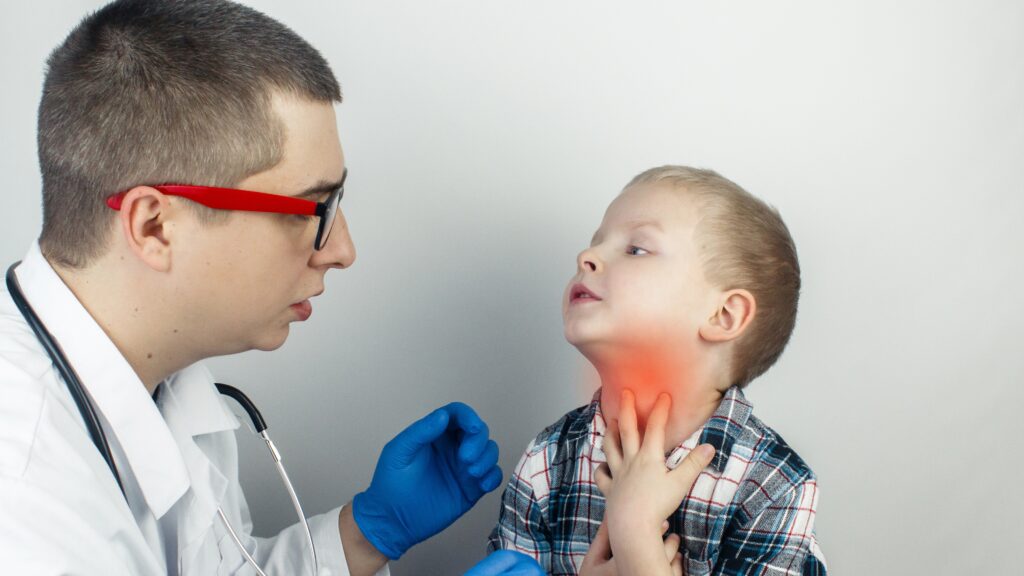
Your child’s tonsils (palatine tonsils) are the two oval-shaped pads of lymphatic tissue you can see at the very back of their throat, one on each side. They are not useless flaps of skin; they are a critical part of the body’s immune system, especially in young children.
Think of your tonsils as the “gatekeepers” of your child’s body. They are the first line of defense against pathogens (germs, bacteria, and viruses) that enter through the mouth and nose. Their job is to:
Trap Invaders: They have a rough, crater-like surface (called crypts) that traps inhaled and ingested germs.
“Sample” the Germs: Once trapped, the tonsils “sample” the pathogens.
Manufacture Antibodies: They then produce white blood cells and antibodies specifically designed to fight that germ. This is a key way the body learns to boost immunity.
The problem is that these gatekeepers are on the front lines of a constant war. Sometimes, the viral or bacterial load is too high, and the tonsils themselves become overwhelmed and infected.
This infection leads to inflammation, and that is what we call Tonsillitis.
Chapter 2: Why Winter is the Official “Tonsillitis Season”
It’s not your imagination; tonsillitis and other respiratory illnesses are far more common in the winter. Your efforts to prevent cold and flu are fighting an uphill battle against the season itself. Understanding why is one of the most important winter health tips for any parent.
Dry Air is the Enemy: This is the single biggest factor. Winter air, both indoors (from heating systems) and outdoors, is incredibly dry. Your child’s nose and throat are lined with a thin, protective layer of mucus and tiny hairs (cilia) that trap germs. Dry air evaporates this moisture, paralyzing the cilia. This allows viruses and bacteria to sit on the throat lining and invade the tonsils, bypassing the body’s first line of defense.
Viruses Love the Cold: The viruses that cause the common cold and flu—the primary culprits behind viral tonsillitis—are actually more stable and replicate more efficiently in cooler, less humid air.
Indoor Crowding: When it’s cold, where are kids? They are huddled together indoors, at school, in daycare, or at home. This close-quarters living is the perfect environment for germs to spread from one child to another, making it nearly impossible to prevent cold and flu entirely.
Reduced Vitamin D: Less time playing outside means less sun exposure, which is our primary source of Vitamin D. Vitamin D is essential for a robust immune response. Low levels can make it harder for your child’s body to boost immunity and fight off infections.
This combination of factors creates a “perfect storm” for the germs that cause tonsillitis.
So, how do you know? Your child says, “My throat hurts.” How can you tell if it’s just a scratchy throat from dry air, or if it’s a full-blown case of tonsillitis?
Look for this cluster of key symptoms of tonsillitis.
The “Big Three” Tonsillitis Symptoms
A Severe Sore Throat: This is the hallmark symptom. It’s not just a minor ache; it is a severe sore throat that causes painful swallowing (a symptom called odynophagia). Your child may cry when they swallow, refuse to eat or drink (even their favorite treats), or complain of a “hot” or “burning” feeling. In infants and toddlers, the main sign is often drooling because it hurts too much to swallow their own saliva.
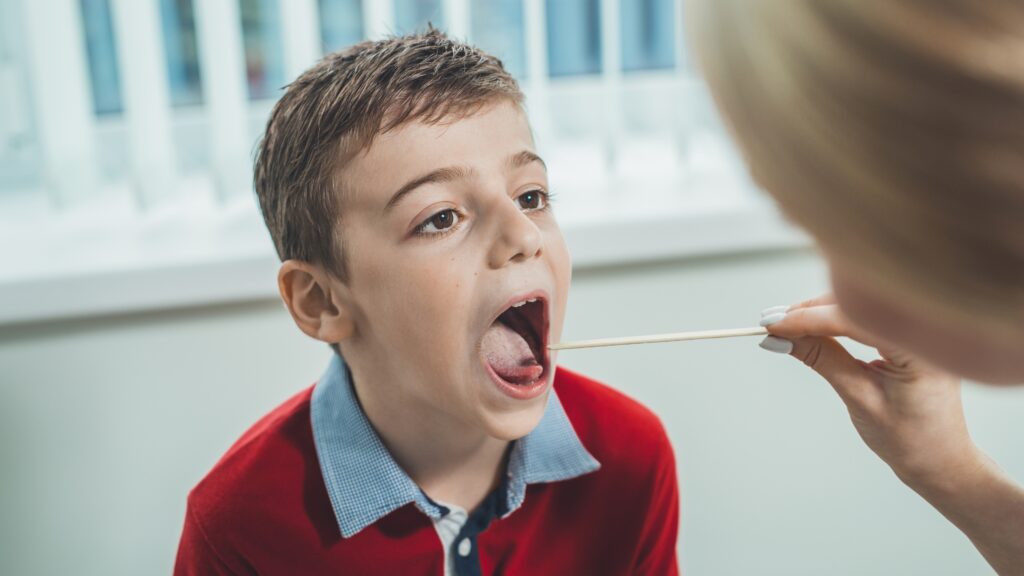
Visibly Red, Swollen Tonsils: You don’t have to guess. Get a flashlight, have your child open wide and say “Ahhh.” You will see that the two mounds of tissue at the back of their throat are not their normal pink color; they will be an angry, inflamed red and visibly swollen, sometimes so large they appear to be “kissing” in the middle.
Fever: A fever (a temperature over 100.4°F or 38°C) is a very common symptom of tonsillitis. It’s a sign that your child’s body is trying to fight off a significant infection. A low-grade fever is common with viral tonsillitis, while a high fever is often a red flag for bacterial tonsillitis.
Other Important Symptoms of Tonsillitis to Watch For
Symptoms of Tonsillitis
White Spots on Tonsils: This is a major diagnostic clue. Look closely at the swollen tonsils. Do you see white or yellow patches of pus (exudate)? This is a very strong indicator of bacterial tonsillitis, most famously Strep Throat.
Swollen Lymph Nodes: Gently feel the sides of your child’s neck, just under the jawline. You will likely feel tender, swollen lumps. These are the lymph nodes (often called “swollen glands”) doing their job to fight the infection.
Hoarseness or a Muffled Voice: The swelling in the throat can make your child’s voice sound muffled, “hot potato” voice, or hoarse.
Bad Breath (Halitosis): The infection and debris on the tonsils can create a very distinct, unpleasant bad breath.
General Sickness Symptoms: Just like with the flu, your child will likely feel unwell. This includes:
Headache
Stomach ache (very common in children with strep)
Vomiting or nausea
General fatigue, lethargy, and crankiness.
Ear Pain: The nerves in the throat are closely connected to the nerves in the ear. An inflamed tonsil can cause “referred pain,” making your child complain of an earache even if the ear itself is not infected.
If your child is presenting with a severe sore throat plus a fever and swollen tonsils, it is time to call a doctor.
This is the most important question your doctor must answer. Why is it so important to receive a tonsillitis diagnosis promptly? Because the cause of the tonsillitis dictates the entire tonsillitis treatment plan.
Tonsillitis is an inflammation, but it has two very different causes:
1. Viral Tonsillitis
The Cause: This is the most common form, accounting for 70-85% of all cases. It’s caused by the same viruses that give us the common cold and flu (like adenovirus, rhinovirus, or influenza).
Key Symptoms: Tends to be accompanied by other “cold” symptoms, like a runny nose, cough, and hoarseness.
The Treatment:ANTIBIOTICS DO NOT WORK on viruses. The tonsillitis treatment is purely supportive care—rest, fluids, and pain management. This is a key reason why you shouldn’t just demand antibiotics; they won’t help and can cause harm.
2. Bacterial Tonsillitis (Strep Throat)
The Cause: This is the more serious, less common form. It is most often caused by a specific bacteria: Group A Streptococcus (GAS). When this bacteria causes tonsillitis, it is called Strep Throat.
Key Symptoms: Classic signs are a suddensevere sore throat, fever, white spots on tonsils, and swollen lymph nodes, but often without a cough or runny nose.
The Treatment:Strep Throatmust be treated with antibiotics (like penicillin or amoxicillin).
Why We CANNOT Ignore Strep Throat: The Risk of Complications
This is the answer to why it’s important to receive a tonsillitis diagnosis promptly. We don’t just treat Strep Throat to make the sore throat go away faster. We treat it to prevent severe, life-altering complications.
If left untreated, the Group A strep bacteria can trigger a misdirected immune response in your child’s body, leading to:
Rheumatic Fever: A serious inflammatory disease that can permanently damage your child’s heart valves, leading to heart failure later in life.
Post-Streptococcal Glomerulonephritis: A serious inflammation of the kidneys.
Scarlet Fever: A “strep rash” that looks like sandpaper and feels rough.
Peritonsillar Abscess (Quinsy): This is a medical emergency. An abscess (a collection of pus) forms behind the tonsil, causing an agonizing severe sore throat, inability to open the mouth, and potential airway blockage. This requires immediate drainage by an ENT specialist.
You cannot tell the difference between viral and bacterial tonsillitis just by looking. You must get a test. This is why a prompt tonsillitis diagnosis is the most important of all winter health tips when a severe sore throat is present.
Chapter 5: Getting the Right Diagnosis at the ENT Clinic
When you take your child to the doctor or an ENT specialist, they will not guess. They will perform a simple, fast tonsillitis diagnosis test.
The Physical Exam: The doctor will look at the swollen tonsils, check for white spots on tonsils, feel the swollen lymph nodes, and listen to your child’s breathing.
The Rapid Strep Test: This is the standard of care. The doctor or nurse will take a throat culture (a quick swab of the back of the throat and tonsils). The swab is tested in the clinic, and you will have an answer in 5-10 minutes.
The Throat Culture: If the rapid strep test is negative (it can sometimes give a false negative), the doctor may send a second swab to the lab to be “cultured” (to see if bacteria grow). This takes 24-48 hours but is the “gold standard” for a definitive diagnosis.
These tests are the only way to know if antibiotics are necessary.
Chapter 6: The Three Faces of Tonsillitis: Acute, Recurrent, and Chronic
Tonsillitis doesn’t just present as a one-time event. For many children, it becomes a frustrating and painful cycle. Your ENT specialist will classify your child’s condition into one of three types of tonsillitis:
1. Acute Tonsillitis
This is a single episode of tonsillitis—either viral or bacterial—that lasts from a few days to about two weeks. With proper tonsillitis treatment (antibiotics for strep, or supportive care for a virus), the child recovers fully.
2. Recurrent Tonsillitis
This is the “here we go again” diagnosis. Your child gets tonsillitis over and over. This is a sign that the tonsils are no longer a strong defense system but are, in fact, chronically infected “reservoirs” of bacteria. This is a massive drain on your child’s health, their school attendance, and your family’s quality of life. The official criteria for recurrent tonsillitis are:
7 or more infections in one year.
5 or more infections per year for two years in a row.
3 or more infections per year for three years in a row. At this point, efforts to boost immunity are failing, and your ENT specialist will start discussing a more permanent tonsillitis treatment.
3. Chronic Tonsillitis
This is a different beast. This isn’t about repeated acute attacks; it’s a persistent, low-grade, long-term infection of the tonsils. Children with chronic tonsillitis suffer from:
A chronic sore throat or “scratchy throat.”
Persistent swollen lymph nodes in the neck.
Chronic bad breath (halitosis), which is often severe.
Tonsil Stones (Tonsilloliths): These are small, foul-smelling white or yellow chunks of hardened bacteria and debris that get trapped in the tonsil crypts.
Chapter 7: The Parent’s Action Plan: A Complete Guide to Tonsillitis Treatment
You have a tonsillitis diagnosis. What now? The tonsillitis treatment plan depends entirely on the cause and type.
Tonsillitis Treatment for Viral Tonsillitis
This is all about supportive care, comfort, and patience. These are the best winter health tips for relief:
Hydration: This is paramount. The fever causes dehydration, and the sore throat makes drinking painful. Push clear, warm (not hot) fluids. Warm broth, decaf tea with honey (for children over 1), and diluted juices are great.
Pain Relief: Use over-the-counter pain relievers like Acetaminophen (Tylenol, Calpol) or Ibuprofen (Advil, Motrin). These are essential to control the fever and reduce the pain of painful swallowing enough for your child to drink.
The Humidifier: This is a top-tier winter health tip. A cool-mist humidifier in your child’s room adds moisture to the dry air, which soothes the inflamed throat and nasal passages.
The Saltwater Gargle: For children old enough to gargle (usually 6+), a saltwater gargle (1/2 teaspoon of salt in a glass of warm water) is a medical miracle. It reduces swelling, cleanses the throat, and provides significant sore throat relief.
Rest: The body needs energy to fight the virus and boost immunity. Let your child rest and sleep as much as they need.
Tonsillitis Treatment for Bacterial Tonsillitis (Strep Throat)
Antibiotics: This is the primary tonsillitis treatment. Your doctor will prescribe a 10-day course of an antibiotic like Amoxicillin or Penicillin.
THE GOLDEN RULE: You must give your child the entire 10-day course, even if they feel 100% better after three days. Stopping early is a recipe for disaster. It allows the strongest bacteria to survive, leading to a relapse, antibiotic resistance, or the severe complications we discussed (like rheumatic fever).
Contagiousness: Your child is no longer contagious 24 hours after starting antibiotics.
Supportive Care: Use all the same viral relief measures (fluids, rest, pain relief) alongside the antibiotics.
Tonsillitis Treatment for Recurrent & Chronic Tonsillitis: The Surgical Solution
If your child suffers from recurrent tonsillitis or chronic tonsillitis, or if their swollen tonsils are so large they are causing obstructive sleep apnea (snoring and pauses in breathing at night), your ENT specialist will recommend a Tonsillectomy.
A tonsillectomy is the surgical removal of the tonsils. It is one of the most common and safest pediatric surgeries performed. This procedure is a definitive cure for recurrent tonsillitis and chronic tonsillitis. It can be a life-changing event, ending the cycle of sickness, missed school, and constant antibiotics.
Chapter 8: Proactive Protection: How to Prevent Tonsillitis This Winter
As a parent, your goal is to avoid this entire situation. While you can’t live in a bubble, you can follow these essential winter health tips to prevent tonsillitis and prevent cold and flu.
Hand Hygiene is Everything: This is the #1 way to prevent cold and flu. Teach your children to wash their hands with soap and water for 20 seconds, especially after school, before eating, and after using the bathroom.
Don’t Share: Teach your kids not to share drinks, water bottles, or utensils.
Boost Immunity Through Diet: A strong immune system is your best defense.
Focus on whole foods: fruits, vegetables, and lean proteins.
Vitamin C: Oranges, strawberries, bell peppers.
Zinc: Lean meats, beans, nuts.
Vitamin D: This is a key winter health tip. Most people are deficient in winter. Talk to your pediatrician about a supplement.
Vaccinate: Get your child (and your whole family) a flu shot. The flu virus is a major cause of viral tonsillitis, so this is a direct way to prevent tonsillitis.
Hydrate and Humidify: Run a humidifier at night. This keeps the tonsils’ defensive mucus barrier intact.
Prioritize Sleep: Sleep is when the body repairs itself and the immune system recharges. A sleep-deprived child is an immune-compromised child.
Chapter 9: When to Call the Specialist: Medicon Multispeciality Clinic
When to Call the Specialist
You can follow all the winter health tips in the world and do everything right to boost immunity, and your child might still get tonsillitis. That is not a failure; it is a simple fact of childhood.
Your job is to know when to seek help.
Call your doctor for any fever in a young infant.
Call for any severe sore throat accompanied by fever and swollen lymph nodes.
Go to the ER for any difficulty breathing, drooling, or inability to swallow.
But what if this is your third, fourth, or fifth time in the doctor’s office this winter? What if you are stuck in the endless cycle of recurrent tonsillitis?
This is when you need to escalate from a general pediatrician to a specialist. You need a Pediatric ENT.
If you are in Delhi, your search for an expert who understands the unique, complex, and recurring ENT issues in children ends at Medicon Multispeciality Clinic.
Medicon Multispeciality Clinic is a premier center for ENT (Ear, Nose, and Throat) care. Our ENT specialists are leaders in diagnosing and treating the full spectrum of pediatric ENT conditions.
Expert Diagnosis: We don’t guess. Our clinic is equipped with Rapid Strep Test and throat culture capabilities for a fast, accurate tonsillitis diagnosis.
Pediatric ENT Expertise: Our specialists are trained in the unique anatomy and needs of children. They can quickly differentiate between a simple cold and a serious tonsillitis or adenoid issue.
Comprehensive Treatment for Recurrent Tonsillitis: We are the solution for the “sick-all-the-time” child. We don’t just write another prescription; we investigate why it keeps happening.
Advanced Surgical Solutions: If your child is a candidate for a tonsillectomy, our ENT surgeons are among the best ENT surgeons in Delhi. They perform these procedures with precision and compassionate post-operative care.
A Holistic Approach: We know these issues are all connected. Our ENT team also handles related problems, from adenoiditis and obstructive sleep apnea to recurring ear infections.
Don’t let tonsillitis steal your child’s winter. You deserve a partner who can break the cycle of sickness.
Contact Medicon Multispeciality Clinic today. Schedule a consultation with our ENT department and let our specialists give your child—and your family—the gift of a healthier, happier winter.





 Chronic Sinusitis: Symptoms, Causes & Treatment
 Skull Base Surgery in Gurgaon: Solving Complex Cases Safely
 Oral Cancer Symptoms, Risks, and Prevention Tips Explained
 Choosing the Best Cochlear Implant Surgery Clinic in Gurgaon for Effective Hearing Restoration