How to Know If You Have a Thyroid. The Ultimate Guide to Symptoms, Tests, and Finding the Right Specialist. We live in a state of chronic exhaustion. We blame our fatigue on long work hours, our thyroid weight gain on a slowing metabolism, our brain fog on stress, and our anxiety on the pressures of modern life. We struggle to get through the day, feeling like we’re running on empty, and we tell ourselves, “This is just normal.”
But what if it’s not?
What if these diverse, seemingly unrelated problems—the hair loss, the dry skin, the heart palpitations, the constipation, the constant feeling of being too hot or too cold—are all warning signs? What if they are all symptoms pointing to one small, butterfly-shaped gland in your neck?
Welcome to the ultimate guide to understanding your thyroid. When people search “How to know if you have thyroid,” what they are really asking is, “Do I have a thyroid problem?” This is one of the most important questions you can ask about your health. The thyroid gland is the silent conductor of your body’s orchestra, and if it’s out of tune, the entire system can descend into chaos.
We will explore what is the thyroid? and its crucial role in your thyroid health. We will take a deep dive into the two main conditions: Hypothyroidism (an underactive thyroid) and Hyperthyroidism (an overactive thyroid). We will break down the complex list of thyroid symptoms, from the most common signs of thyroid problems to the subtle red flags you might be ignoring.
We will explain the vital thyroid blood tests—including the all-important TSH test—that provide a definitive diagnosis. We’ll also explore the physical signs, like a goiter or thyroid nodules, and explain why a lump in the throat or hoarseness means you should see an ENT specialist. Finally, if you’re in Delhi, we will connect you to a centre of excellence, Medicon Multispeciality Clinic, where expert ENT (Ear, Nose, and Throat) specialists are uniquely qualified to diagnose and treat structural thyroid issues.
Before you can understand thyroid problems, you must first understand the thyroid gland itself.
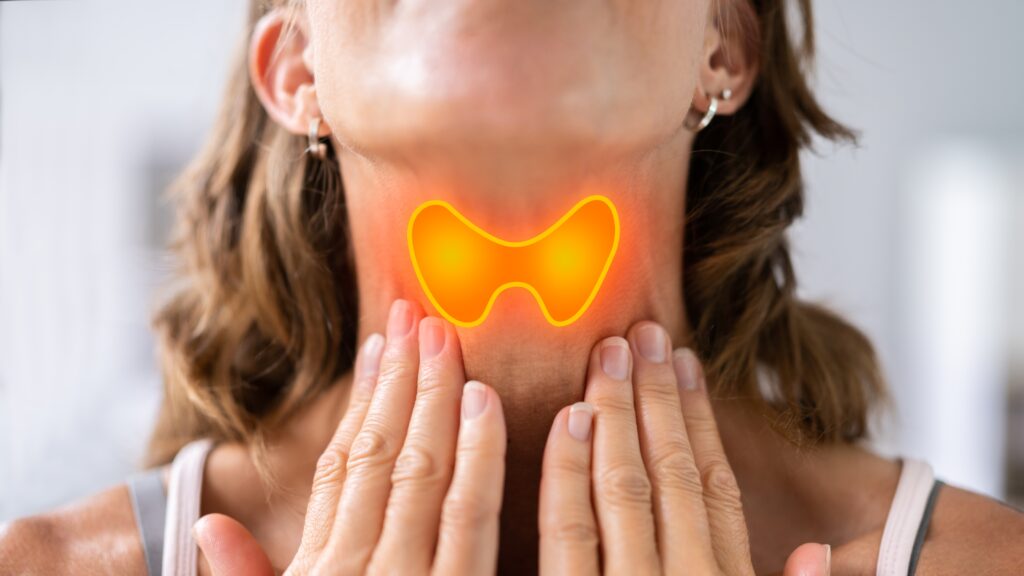
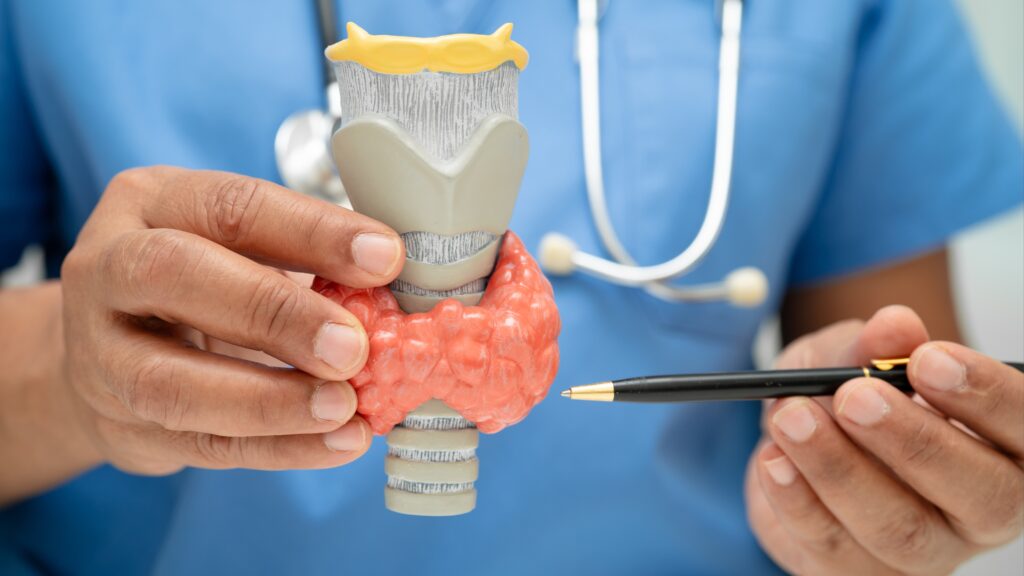
What is the thyroid? The thyroid gland is a small, butterfly-shaped endocrine gland located in the front of your neck, just below your Adam’s apple (larynx) and wrapped around your windpipe (trachea). You can often feel it if you swallow. Its location in the neck is critical—a fact we’ll return to when we discuss the role of an ENT specialist for thyroid issues.
What Does the Thyroid Gland Do? Think of your thyroid gland as the master control switch for your body’s metabolism. It produces, stores, and releases two critical hormones into your bloodstream: T4 (Thyroxine) and T3 (Triiodothyronine). These hormones travel to every single cell in your body, telling them how fast or slow to work.
Your thyroid health dictates:
Your Metabolism: How fast your body burns calories and produces energy.
Your Heart Rate: It controls how fast or slow your heart beats.
Your Body Temperature: It acts as your internal thermostat.
Your Brain Function: It impacts concentration, memory, and mood.
Your Digestion: It controls the speed of your digestive tract.
Your Muscle Control, Skin & Hair Growth, and Menstrual Cycles.
How is the Thyroid Controlled? The TSH Connection Your thyroid doesn’t just decide to work on its own. It takes orders from the pituitary gland in your brain.
Your pituitary gland releases TSH (Thyroid Stimulating Hormone).
This TSH “tells” your thyroid to get to work and produce T4 and T3.
If your T4 and T3 levels in the blood are low, your pituitary senses this and increasesTSH production, shouting, “Make more!”
If your T4 and T3 levels are high, your pituitary decreasesTSH production, whispering, “Slow down!”
This delicate feedback loop is the key to all thyroid testing. A thyroid problem arises when this system breaks. This leads us to the two main conditions: Hypothyroidism (too slow) and Hyperthyroidism (too fast).
The Slow-Down: How to Know If You Have Hypothyroidism
Hypothyroidism, or an underactive thyroid, is the most common thyroid problem. This is a condition where your thyroid gland does not produce enough thyroid hormones.
Think of it as your body’s “low battery” mode. The master metabolic switch is turned down, and every single system in your body slows to a crawl.
In this state, your blood tests will typically show low T4 (low hormone) and high TSH levels (your brain is shouting at the lazy thyroid to work).
The Exhaustive List: Common Hypothyroidism Symptoms
Do you have a thyroid problem? If you have an underactive thyroid, you will likely be plagued by a combination of the following hypothyroidism symptoms. These signs of low thyroid function are often subtle at first and worsen over time.
Persistent, Debilitating Fatigue: This is the #1 complaint. It’s not just “I’m tired.” It’s a bone-deep exhaustion. The fatigue and thyroid connection is powerful. You can sleep for 8-10 hours and still wake up feeling like you haven’t slept at all.
Unexplained Thyroid Weight Gain: This is the second major sign. Your metabolism has slowed down, so you burn fewer calories. You may be eating the same or even less, but you’re still experiencing thyroid weight gain and find it nearly impossible to lose.
Feeling Cold All the Time (Cold Intolerance): You are your body’s thermostat. When your thyroid is low, it’s like the heat is turned off. You’re wearing a sweater when everyone else is comfortable.
Dry Skin, Brittle Nails, and Hair Loss: This is a classic trio. Your skin becomes dry, flaky, and coarse. Your nails become brittle and break easily. You experience significant hair loss, particularly thinning of the hair on your head and even the outer third of your eyebrows.
Constipation: Your digestive system slows down, leading to chronic constipation.
Brain Fog and Cognitive Issues: This is a deeply frustrating thyroid symptom. You have brain fog, difficulty concentrating, poor memory, and a general feeling of mental slowness.
Depression, Anxiety, and Mood Swings: The depression and thyroid link is medically undisputed. Many people are misdiagnosed with clinical depression when the root cause is actually hypothyroidism. You may also feel apathetic, listless, or anxious.
Muscle Aches and Joint Pain: You may feel unexplained muscle stiffness, aches, and joint pain.
Irregular or Heavy Menstrual Periods: For women, a thyroid problem wreaks havoc on the menstrual cycle. Hypothyroidism can cause very heavy, painful, and prolonged periods. Infertility and thyroid and pregnancy complications are also a major concern.
A Puffy Face and Hoarseness: You may notice your face, especially around the eyes, looks puffy. Your voice may also become hoarse and gravelly—a key symptom an ENT specialist would investigate.
Goiter (Enlarged Thyroid): Sometimes your thyroid will enlarge in a desperate attempt to produce more hormones, creating a visible swollen thyroid or goiter.
What Causes Hypothyroidism? The Role of Hashimoto’s
Why does this happen? The overwhelming #1 cause of hypothyroidism is Hashimoto’s Disease, also known as Hashimoto’s thyroiditis.
Hashimoto’s disease is an autoimmune condition. This means your own immune system gets confused and mistakenly attacks and destroys your thyroid gland. To diagnose this, a doctor needs to order a Thyroid Antibodies Test (TPO). If this TPO test is positive, you have Hashimoto’s. Other causes of hypothyroidism include surgical removal of the thyroid, radiation treatment, or certain medications.
What is Subclinical Hypothyroidism?
This is a very common condition. Subclinical hypothyroidism is a “mild” or early form where your Free T4 levels are still normal, but your TSH levels are slightly high. Your brain is just beginning to shout. You may have mild hypothyroidism symptoms, and your doctor will need to decide if thyroid treatment is necessary.
The Speed-Up: Recognizing the Signs of Hyperthyroidism
Now let’s look at the opposite problem: Hyperthyroidism, or an overactive thyroid. This is a condition where your thyroid gland produces too much thyroid hormone.
Think of it as your body’s “stuck accelerator” mode. The master metabolic switch is cranked to high, and every system is running dangerously fast.
In this state, your blood tests will typically show high T4 (high hormone) and low TSH levels (your brain has stopped “talking” to the overactive thyroid, trying to get it to slow down).
The Exhaustive List: Common Hyperthyroidism Symptoms
If you have an overactive thyroid, your body will feel like it’s in a constant state of overdrive. The hyperthyroidism symptoms are often the mirror opposite of hypothyroidism.
Anxiety, Nervousness, and Irritability: This is a hallmark. The anxiety and thyroid connection is profound here. You feel “wired but tired,” jittery, nervous, and emotionally volatile for no clear reason.
Heart Palpitations or a Racing Heart: This is a frightening thyroid symptom. You can feel your heart pounding, racing, or skipping beats (palpitations), even when you are at rest.
Unexplained Thyroid Weight Loss: You are losing weight, sometimes rapidly, even though you are eating the same amount or more than usual. Your appetite may be ravenous. This thyroid weight loss is due to your super-charged metabolism.
Hand Tremors: You may notice a fine, subtle shaking in your hands and fingers, known as hand tremors.
Feeling Hot and Sweating (Heat Intolerance): You feel hot and sweaty when others are cold. You have a low tolerance for heat and may have a constantly clammy-feeling.
Diarrhea or Frequent Bowel Movements: Your digestive system is on fast-forward, leading to diarrhea or more frequent, looser stools.
Bulging Eyes (Graves’ Ophthalmopathy): This is a very specific and serious sign, particularly linked to Graves’ Disease. You may notice your eyes seem to be bulging or “staring.” You might also have gritty, dry, or red eyes and puffy eyelids.
Sleep Problems (Insomnia): Your “wired” state makes it very difficult to fall asleep or stay asleep, even though you are exhausted.
Muscle Weakness and Fatigue: This is a confusing one. Even though your body is in overdrive, your muscles are weak and you feel exhausted from the constant metabolic strain.
Irregular or Light Menstrual Periods:Hyperthyroidism can make your periods very light, infrequent, or stop altogether.
Goiter (Enlarged Thyroid): Just like in hypo, your thyroid can become a swollen thyroid or goiter, or you may develop specific thyroid nodules that are overproducing hormones.
What Causes Hyperthyroidism? The Role of Graves’ Disease
Why does this “speed-up” happen? The #1 cause of hyperthyroidism is Graves’ Disease.
Graves’ Disease is also an autoimmune condition. But instead of attacking and destroying the thyroid, the body creates an antibody (TSI) that mimicsTSH. This antibody constantly “steps on the gas,” telling the thyroid to produce more and more hormone, 24/7. This is why it’s so important to get a full thyroid panel, including a Thyroid Antibodies Test, for a proper diagnosis.
Other causes of hyperthyroidism include thyroid nodules that become “hot” and overproduce hormones (Toxic Nodular Goiter) or Thyroiditis (a temporary inflammation that causes the thyroid to “dump” its stored hormones).
What is Subclinical Hyperthyroidism?
Similar to its counterpart, subclinical hyperthyroidism is when your Free T4 is normal, but your TSH levels are low. It’s an early warning sign that your doctor will need to monitor closely, as it can still cause symptoms like heart palpitations.
The Physical Signs – The Lump in Your Throat (The ENT Connection)
So far, we’ve focused on the “invisible” thyroid symptoms—the feelings of fatigue, anxiety, and temperature changes. But thyroid problems can also have very real, very physical signs that you can see and feel in your neck.
This is where the expertise of an ENT specialist (Ear, Nose, and Throat doctor) becomes absolutely critical. An ENT specialist is a surgeon of the head and neck, and the thyroid gland is a primary structure in their domain.
If your “how to know if you have a thyroid problem” journey started because you felt something wrong in your neck, this chapter is for you.
Goiter: The Enlarged Thyroid
A goiter is simply an enlarged thyroid. It is not a disease itself but a physical sign of an underlying thyroid problem. It can be a diffuse swollen thyroid or a lumpy, nodular goiter.
Why does it happen? In Hashimoto’s, the gland swells from the autoimmune attack. In Graves’ Disease, it swells from the constant stimulation. It can also happen from iodine deficiency.
Thyroid Nodules: The Lump in the Gland
Thyroid nodules are lumps or bumps that form within the thyroid gland. They are incredibly common, with up to 50% of people having at least one by age 60.
The Big Question: Are Thyroid Nodules Cancer? This is the first fear everyone has when they feel a lump in the throat. Here is the reassuring news:
Over 90-95% of thyroid nodules are benign (non-cancerous).
They can be solid or fluid-filled (cysts).
Sometimes, as in hyperthyroidism, a “hot” nodule can be the cause of your thyroid problem, but most nodules don’t produce hormones at all and are “cold.”
The Red-Flag Symptoms: When a Thyroid Problem Becomes an ENT Problem
An enlarged thyroid (goiter) or large thyroid nodules can grow big enough to press on the other structures in your crowded neck. This leads to a unique set of thyroid symptoms that are primary ENT complaints:
A “Lump in Throat” Sensation (Globus): You have a persistent feeling of a lump, a tickle, or something stuck in your throat, but it’s not a real lump. This “globus sensation” can be caused by the goiter’s presence.
Difficulty Swallowing (Dysphagia): This is a more serious sign. The enlarged thyroid or thyroid nodules are physically pressing on your esophagus (your swallowing tube), making it difficult to swallow solid foods.
Hoarseness or Voice Changes: This is a critical thyroid symptom. The thyroid sits right near the recurrent laryngeal nerve, which controls your vocal cords. A large goiter or an invasive thyroid nodule can press on or irritate this nerve, causing chronic hoarseness.
Thyroid Neck Pain: While less common, some conditions like thyroiditis (inflammation) or a bleeding nodule can cause thyroid neck pain.
Difficulty Breathing: In severe cases, a very large goiter can press on your trachea (windpipe), causing a feeling of pressure or shortness of breath, especially when lying down.
If you have any of these structural symptoms, your first call should be to an ENT specialist. They are the experts in diagnosing and managing these physical thyroid problems.
The Diagnosis – How to Get Definitive Answers
You’ve read the hypothyroidism symptoms. You’ve seen the hyperthyroidism symptoms. You’re wondering, “Do I have a thyroid problem?“
It’s time to stop guessing. The thyroid symptoms are too vague and overlap with too many other conditions. You cannot diagnose yourself on the internet. You need a thyroid test.
The thyroid check-up and diagnostic process is a clear, step-by-step path.
Step 1: The Consultation (Find a Thyroid Specialist)
Your first step is to see a thyroid doctor. This could be:
Your General Practitioner (GP).
An Endocrinologist (a hormone specialist).
An ENT Specialist for thyroid problems (especially if you have a goiter, hoarseness, or lump in throat).
You will discuss your symptoms, family history, and personal health. This is the first and most important step.
Step 2: The Thyroid Blood Test (The Thyroid Function Test)
This is the core of the diagnosis. Your doctor will order a thyroid blood test to get your levels. A full thyroid panel provides the most complete picture.
TSH Test (Thyroid Stimulating Hormone): This is the single most important screening test.
High TSH Levels: Your brain is “shouting.” This is the #1 sign of hypothyroidism.
Low TSH Levels: Your brain is “whispering.” This is the #1 sign of hyperthyroidism.
Free T4 (Thyroxine): This measures the actual, active T4 hormone available in your blood.
Low T4 (with High TSH) confirms hypothyroidism.
High T4 (with Low TSH) confirms hyperthyroidism.
Free T3 (Triiodothyronine): Sometimes checked. It is the more potent, active hormone.
Thyroid Antibodies Test (TPO & TSI): This is not a thyroid function test but a cause test.
TPO Antibodies (Thyroid Peroxidase Antibodies): High levels of TPO confirm Hashimoto’s Disease.
TSI (Thyroid-Stimulating Immunoglobulin): High levels confirm Graves’ Disease.
Based on these thyroid test results, your doctor can almost always give you a definitive diagnosis of hypothyroidism, hyperthyroidism, or confirm that your thyroid health is normal.
Step 3: Imaging (If a Lump is Found or Your Neck is Swollen)
If your thyroid blood test is abnormal, or if your doctor feels a goiter or thyroid nodule during your thyroid check-up, the next step is imaging.
Thyroid Ultrasound: This is the #1 tool. A thyroid ultrasound is a non-invasive, painless test that uses sound waves to create a picture of your thyroid gland. It can:
Confirm the presence of a swollen thyroid (goiter).
Measure the exact size and number of thyroid nodules.
See if a nodule is solid or fluid-filled (a cyst).
Identify “suspicious” features that might suggest a thyroid cancer risk (though most are benign).
Thyroid Scan (Radioactive Iodine Uptake – RAIU): This scan is used for hyperthyroidism. You swallow a tiny, safe dose of radioactive iodine. A camera then scans your neck to see where the iodine is “taken up.”
If the whole gland lights up (diffuse uptake), it confirms Graves’ Disease.
If only one nodule lights up (a “hot nodule”), it’s the cause of your hyperthyroidism.
“Cold nodules” don’t take up iodine and are the ones that carry a slightly higher risk of being cancerous.
Step 4: The Biopsy (If a Nodule is Suspicious)
If your thyroid ultrasound finds a “suspicious” thyroid nodule (based on its size, shape, or features), the final diagnostic step is a biopsy.
Fine Needle Aspiration (FNA): A Fine Needle Aspiration (FNA) is the gold standard. It’s a simple, in-office procedure. A doctor (often an ENT specialist or radiologist) uses a very thin needle, guided by the thyroid ultrasound, to take a tiny sample of cells from the nodule.
The cells are sent to a lab to be 100% certain if they are benign or (in rare cases) cancerous. This test provides definitive peace of mind.
Chapter 6: A Brief Look at Thyroid Treatment (The Path to Wellness)
This guide’s main goal is to help you know if you have a thyroid problem, but it’s important to know that these conditions are highly treatable.
Hypothyroidism Treatment: This is very straightforward. The thyroid treatment is a simple, once-a-day pill called Levothyroxine. This is a synthetic version of the T4 hormone your body is missing. It is safe, effective, and for most people, a lifelong thyroid medication that completely resolves the hypothyroidism symptoms.
Hyperthyroidism Treatment: This is more complex, as the goal is to slow down the overactive thyroid.
Medication: Anti-thyroid drugs that block hormone production.
Radioactive Iodine: A pill that destroys the overactive thyroid cells (often leading to hypothyroidism, which is then easily treated with Levothyroxine).
Thyroid Surgery (Thyroidectomy): The surgical removal of the thyroid gland.
Thyroid Surgery (Thyroidectomy): The ENT Specialist’s Role
Thyroid surgery is the definitive thyroid treatment for:
Confirmed or suspected thyroid cancer.
A very large goiter that is causing compressive symptoms (like hoarseness or difficulty swallowing).
Graves’ Disease that doesn’t respond to medication, or for patients (like pregnant women) who can’t take the medications.
Who performs this delicate surgery? This is a key specialty of ENT (Ear, Nose, and Throat) surgeons who have sub-specialized in Head and Neck Surgery. They are the masters of this complex anatomy, and their primary goal is to safely remove the thyroid while protecting the critical surrounding structures, like the vocal cord nerves.
Your Local Partner in Health: Medicon Multispeciality Clinic
We have covered a universe of information. We’ve explored the “slow-down” signs of low thyroid and the “speed-up” hyperthyroidism symptoms. We’ve untangled the complex web of thyroid tests, from the TSH test to the thyroid ultrasound and FNA.
Most importantly, we’ve established a critical link: Your thyroid problem may not show up as thyroid weight gain or anxiety. It may show up as a physical lump in the throat, difficulty swallowing, or a persistent hoarseness in your voice.
If your “how to know if you have a thyroid problem” journey started with a neck symptom, your search for a thyroid specialist Delhi should lead you to an ENT specialist.
This is where Medicon Multispeciality Clinic stands out.
We are a premier multispeciality clinic in Delhi with a world-class ENT (Head & Neck Surgery) department. Our ENT specialists are not just for “ear, nose, and throat” infections; they are highly skilled thyroid specialists who manage the physical and structural side of thyroid problems.
How Medicon Multispeciality Clinic Can Be Your Thyroid Partner:
Expert Diagnosis of Neck Symptoms: If your primary complaint is a goiter, swollen thyroid, hoarseness, or difficulty swallowing, our ENT specialist is the perfect doctor to see. They will perform a comprehensive head and neck exam and can use advanced tools like flexible laryngoscopy (a tiny camera) to examine your throat and vocal cords in detail.
In-House, Advanced Thyroid Diagnostics:Medicon Multispeciality Clinic is equipped to manage your entire diagnostic journey. Our ENT specialists perform thyroid ultrasounds and Fine Needle Aspiration (FNA) biopsies in-clinic, providing you with a safe, comfortable, and fast path to answers.
Surgical Expertise (Thyroidectomy): If your thyroid check-up reveals that you need thyroid surgery (for thyroid cancer, a large goiter, or hyperthyroidism), our ENT surgeons are the experts you want. Thyroidectomy is a core part of their Head & Neck specialty. They have the skill to perform this delicate operation, preserving your voice and ensuring the best possible outcome.
A Collaborative, Multispeciality Approach: Our ENT specialist works as part of a team. We collaborate with our in-house endocrinologists (for thyroid medication management) and general physicians to create a 360-degree thyroid treatment plan for you.
Your First Step: Stop living with the fatigue, the anxiety, the brain fog, or the fear of a lump in your throat. You don’t have to wonder, “Do I have a thyroid problem?” You can know.
If you are looking for the best thyroid doctor Delhi to investigate your symptoms, or if you need an ENT specialist Delhi to examine a change in your neck or voice, your search ends here.
Contact Medicon Multispeciality Clinic today. Book your comprehensive thyroid check-up and let our team of experts provide the clarity, care, and peace of mind you deserve.



 Chronic Sinusitis: Symptoms, Causes & Treatment
 Skull Base Surgery in Gurgaon: Solving Complex Cases Safely
 Oral Cancer Symptoms, Risks, and Prevention Tips Explained
 Choosing the Best Cochlear Implant Surgery Clinic in Gurgaon for Effective Hearing Restoration