
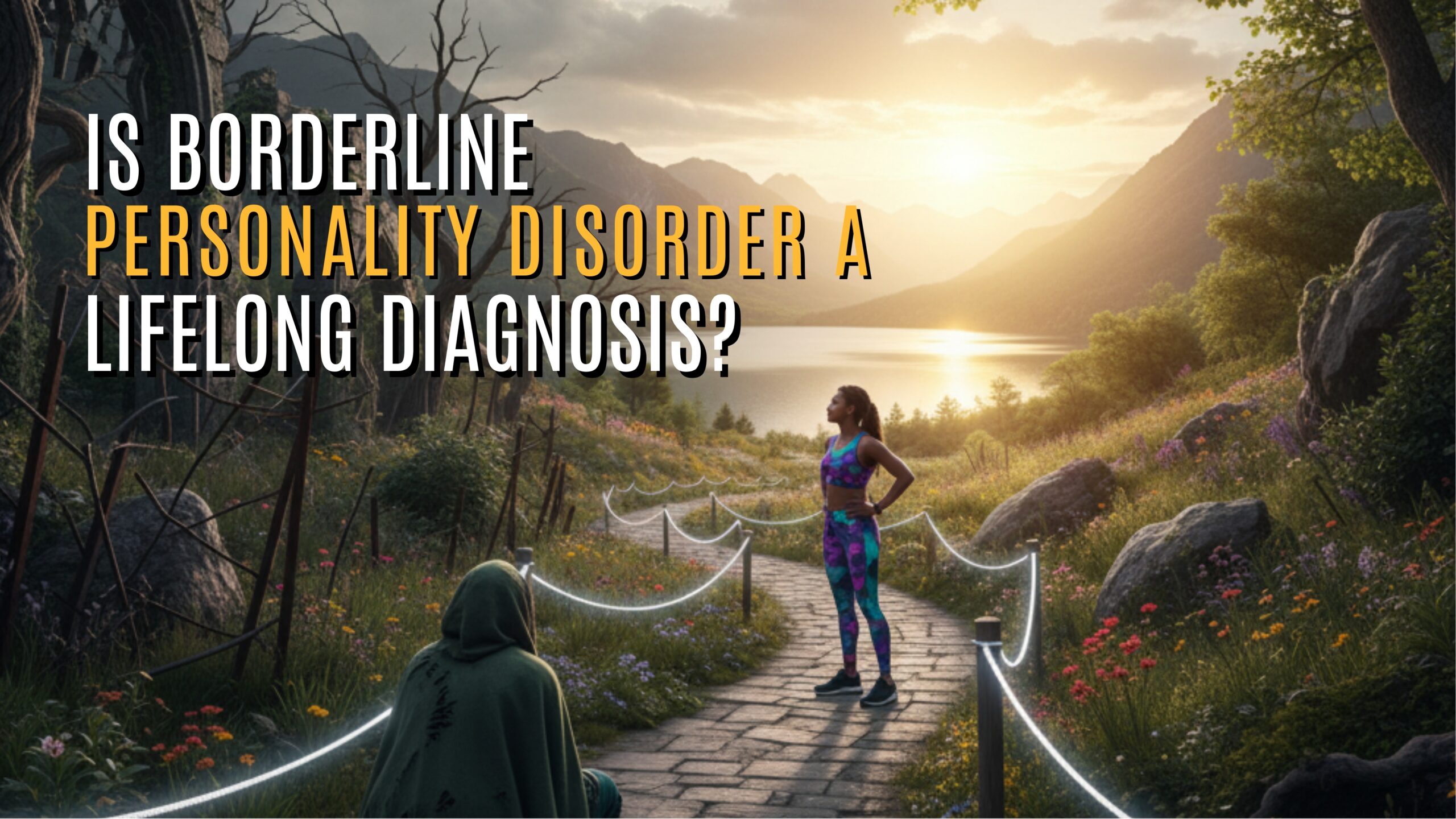
Is Borderline Personality Disorder a Lifelong Diagnosis? Your Journey to Stability and Hope – Receiving a Borderline Personality Disorder diagnosis can feel like the ground has disappeared beneath your feet. For many, the label carries a heavy weight, burdened by stigma and the terrifying misconception that it is a life sentence of instability and pain. You might be asking yourself: Is BPD lifelong? Can BPD be cured? Or perhaps, Does BPD get worse with age?
If you or a loved one is navigating this complex condition, the first thing you need to know is this: The old narrative about Borderline Personality Disorder (BPD) is wrong. It is not a hopeless condition. In fact, it is one of the most treatable personality disorders in mental health today.
This guide is your roadmap. We will explore the reality of BPD recovery, dismantle the myths surrounding BPD life expectancy, and provide you with actionable BPD coping skills to reclaim your life. This is not just about managing symptoms; it’s about thriving with BPD and finding your path to stability and hope.
To understand if BPD is a permanent condition, we must first understand what it actually is. Borderline Personality Disorder is a mental health condition characterized by pervasive instability in moods, behavior, self-image, and functioning.
The signs of BPD can manifest differently in everyone, ranging from “classic” presentations to high-functioning BPD, where the individual suffers intensely internally while maintaining a facade of normalcy. The DSM-5 outlines nine criteria, but they boil down to a few core struggles:
Understanding BPD causes is vital for BPD healing journey. It is rarely just one thing.

Let’s address the elephant in the room. Is BPD lifelong?
The short answer is: No, it does not have to be.
For decades, the psychiatric community believed that personality disorders were rigid and unchangeable. However, modern research has shattered this view. We now know that BPD remission is not only possible but likely with the right treatment.
Long-term studies have shown promising results regarding BPD prognosis.
So, can BPD be treated permanently? While the vulnerability to emotional intensity may remain (it’s part of your temperament), the debilitating symptoms can be resolved. You can reach a point where you no longer qualify for the diagnosis. This is the difference between a BPD chronic condition and a manageable trait.
A common fear is that the condition deteriorates over time. In reality, the opposite is true. Does BPD get better? Yes. Research indicates that BPD severity levels tend to decrease as people enter their 30s and 40s. Impulsive behaviors usually fade first, followed by improvements in emotional regulation. How BPD improves with age is often attributed to the natural maturation of the brain and the acquisition of life skills.
The journey to BPD recovery starts with an accurate diagnosis. Unfortunately, misdiagnosis of BPD is common.
These two are frequently confused because both involve mood swings. However, BPD vs Bipolar Disorder has distinct differences:
There is no single blood test for BPD. A Borderline personality disorder diagnosis requires a comprehensive clinical interview. If you suspect you have signs of BPD in adults or early signs of borderline personality disorder in a teenager, seek a specialist. Accepting your BPD diagnosis is the first step toward gaining control over BPD.

If you are asking how to manage BPD, the answer lies primarily in specialized psychotherapy. BPD medication can help manage specific symptoms like depression or anxiety (common BPD comorbidities), but there is no pill to “cure” personality. Therapy is the engine of change.
DBT for borderline personality disorder is the gold standard. Developed by Dr. Marsha Linehan (who herself struggled with BPD), it focuses on four pillars:
Dialectical behavior therapy for BPD saves lives. It teaches the BPD coping skills necessary to navigate the intense waves of emotion without drowning.
While DBT is preferred, Cognitive Behavioral Therapy for BPD can also be effective. It helps challenge the “black and white” thinking (splitting) that characterizes the disorder. Other therapies like Schema Therapy and Mentalization-Based Treatment (MBT) are also highly effective BPD treatments.
Therapy happens once a week; life happens every day. BPD self-help is about building a BPD daily routine that supports your mental health.
When your emotions hit a 10/10, you need to ground yourself. BPD mindfulness isn’t just meditation; it’s an emergency brake.

Never underestimate the physical foundation of mental health.
How to stop emotional outbursts? Create a crisis plan. When you feel the “wave” coming:
Relationships are often the most painful arena for those with BPD. BPD and relationships are complicated by BPD attachment issues—usually a mix of anxious and avoidant attachment.
People with BPD often have a “Favorite Person” on whom they depend for emotional stability. This can be exhausting for both parties. Ending BPD relationship cycles requires recognizing this dependency and diversifying your support system so one person isn’t carrying your entire emotional world.
Learning BPD boundary setting is crucial. This applies to you setting boundaries with others (“I cannot talk when you yell at me”) and respecting others’ boundaries (“They didn’t text back immediately; that doesn’t mean they hate me”).
If you are a loved one, BPD family support is vital.

Can someone recover from borderline personality disorder? Yes. But recovery isn’t just the absence of symptoms; it’s the presence of a life. This is called BPD functional recovery.
High-functioning BPD individuals often hold down jobs but suffer silently. Rebuilding your life with BPD means finding work that provides structure but doesn’t overwhelm your BPD emotional sensitivity.
BPD lifestyle changes involve cutting out toxicity. This includes substance use, toxic relationships, and environments that trigger BPD trauma.
There is immense BPD hope. There are thousands of BPD success stories—people who have moved from chronic suicidality to lives of connection, joy, and life stability with BPD.
Does BPD reduce over time? Yes. Can BPD symptoms improve? Absolutely. Is there hope for BPD recovery? Without a doubt.
Living with borderline personality disorder is a journey of Borderline personality transformation. The sensitivity that makes the disorder so painful can also make you incredibly empathetic, creative, and passionate once you learn how to stabilize BPD.
For many, the BPD healing journey moves through stages:
BPD and mental health stigma is a major barrier to care. Borderline personality myths suggest people with BPD are manipulative or untreatable. Borderline disorder facts prove otherwise: people with BPD are in immense pain and are doing the best they can to survive.
By sharing BPD positive outcomes and discussing BPD mental health awareness, we create a world where seeking BPD support is seen as an act of courage, not shame.

So, is Borderline Personality Disorder a lifelong diagnosis? Only if you view it as a prison. In reality, it is a starting point. With BPD long-term treatment success rates being so high, the BPD long-term outlook is brighter than ever before.
Overcoming borderline personality disorder takes work. It requires BPD motivation, BPD trauma healing, and a commitment to self-care for BPD. But thriving with BPD is possible. You can learn emotional stability with BPD. You can build healthy relationships. You can find BPD personal growth.
The storm does not last forever. With the right map, the right skills, and the right support, you can navigate your way to calm waters. Living a healthy life with BPD isn’t a fantasy; it’s a future that is waiting for you to claim it.
Can BPD be cured? While “cure” is a strong word, “remission” is the clinical term. Many people reach a point where they no longer meet the criteria for BPD. So, effectively, yes, the disorder can resolve to the point of non-diagnosis.
How long does BPD last? It varies. With intensive therapy like DBT, significant improvement can be seen in one year. Full remission may take several years, but symptoms usually decline steadily with age.
Does BPD ever go away completely? The core temperament (high sensitivity) usually remains, but the maladaptive behaviors (self-harm, rage, instability) can go away completely.
What triggers BPD? What triggers BPD episodes is usually perceived abandonment, rejection, or criticism. Lack of sleep and high stress are also major physiological triggers.
Is BPD a permanent condition? No. It is considered a treatable condition with high rates of remission.
If you or a loved one is struggling, reach out to a mental health professional today. There is BPD support available, and you do not have to walk this path alone.
##BorderlinePersonalityDisorder ##BPD ##BPDRecovery ##BPDWarrior ##DBT ##EmotionalRegulation ##HealingJourney ##MentalHealth ##MentalHealthAwareness ##StopTheStigma #BPD Recovery Rate #BPD Remission #BPD Stability #Dialectical Behavior Therapy (DBT) for BPD #Does BPD Go Away #How to Heal from BPD #Is BPD Lifelong #Life after BPD diagnosis #Living with BPD Long-Term #Signs of BPD healing
 Chronic Sinusitis: Symptoms, Causes & Treatment
 Skull Base Surgery in Gurgaon: Solving Complex Cases Safely
 Oral Cancer Symptoms, Risks, and Prevention Tips Explained
 Choosing the Best Cochlear Implant Surgery Clinic in Gurgaon for Effective Hearing Restoration