Psychiatrist vs. Psychologist vs. Therapist: What’s the Difference?
22 September 20250 Comments
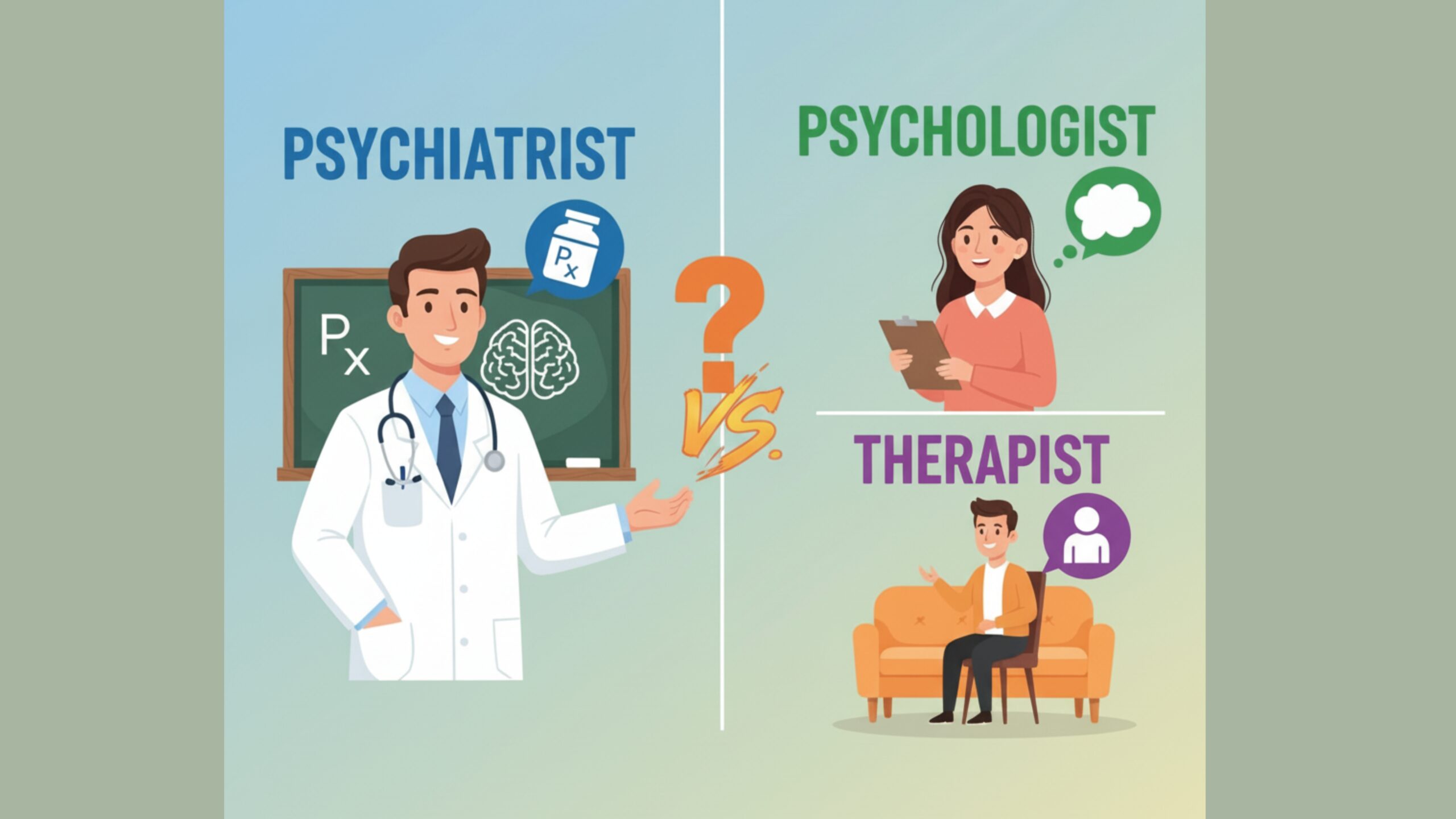
Navigating the world of mental health can often feel like trying to read a map in a foreign language. When you take that courageous first step to seek help, you’re immediately faced with a trio of titles: psychiatrist, psychologist, and therapist. They all sound similar, and to the uninitiated, their roles can seem to blur into one. Who do you turn to when your thoughts feel too heavy? Who can help you navigate a difficult life transition? And who is qualified to prescribe medication if you need it?
This confusion is a common roadblock on the path to well-being, but it doesn’t have to be. Understanding the distinct roles, training, and approaches of these professionals is the first and most empowering step in making an informed decision about your mental healthcare. This in-depth guide will demystify these professions, clarify their unique contributions to mental wellness, and help you determine which path is the right one for your personal journey.
The Psychiatrist: The Medical Doctor of the Mind
At the core of psychiatry is a deep grounding in medicine. A psychiatrist is, first and foremost, a medical doctor (M.D. or D.O.) who has chosen to specialize in mental health. Their journey is a rigorous one, involving the completion of medical school followed by a multi-year residency in psychiatry. This extensive medical training is what truly sets them apart.
Education and Training:
Medical School: A psychiatrist’s education begins with the same foundational medical training as any other physician, be it a surgeon or a cardiologist. They gain a comprehensive understanding of the human body, anatomy, physiology, and disease.
Psychiatric Residency: After medical school, they complete a four-year residency. This is where they dive deep into the world of mental health, learning to diagnose and treat a vast spectrum of mental illnesses. Their training is unique because it integrates a knowledge of the brain’s biology, chemistry, and neurology with the principles of psychology and human behavior.
What a Psychiatrist Does:
The primary and most well-known role of a psychiatrist is the medical management of mental health conditions. Because of their medical license, they are the only professionals in this list legally authorized to prescribe medication.
Diagnosis of Mental Illness: Psychiatrists are experts in diagnosing complex mental health disorders, from anxiety and depression to more severe conditions like bipolar disorder, schizophrenia, and obsessive-compulsive disorder (OCD).
Medication Management: This is their cornerstone. They use their knowledge of psychopharmacology—the study of how medications affect the mind and behavior—to prescribe and manage drugs like antidepressants, anti-anxiety medications, mood stabilizers, and antipsychotics. They carefully monitor patients for effectiveness and side effects, adjusting dosages and types of medication as needed.
Physical Health Assessment: A key advantage of their medical background is the ability to understand the intricate link between physical and mental health. A psychiatrist can order and interpret medical tests (like blood work or brain scans) to rule out underlying physical illnesses that may be causing psychiatric symptoms. For instance, a thyroid imbalance can sometimes mimic the symptoms of depression.
Psychotherapy: While medication is often their primary tool, many psychiatrists are also trained in psychotherapy, or “talk therapy.” However, due to time constraints and specialization, it is common for them to focus on medication management and refer patients to a psychologist or therapist for regular therapy sessions.
When to See a Psychiatrist:
You should consider starting with a psychiatrist if:
You are experiencing severe mental health symptoms that are significantly impairing your ability to function in daily life.
You suspect your mental health issues might have a biological or neurological component.
You have been in therapy and, together with your therapist, have decided that medication might be a beneficial addition to your treatment.
You are dealing with a complex condition like schizophrenia, bipolar disorder, or severe major depression that often requires medical intervention.
The Psychologist: The Architect of Thought and Behavior
While a psychiatrist focuses on the “hardware” and “chemistry” of the brain, a psychologist is the expert on the “software”—our thoughts, emotions, behaviors, and experiences. A psychologist is not a medical doctor and, in most places, cannot prescribe medication. Their expertise lies in the realm of psychological assessment and psychotherapy.
Education and Training:
Doctoral Degree: The path to becoming a clinical psychologist typically involves earning a doctorate in psychology. This can be a Doctor of Philosophy (Ph.D.), which is often research-focused, or a Doctor of Psychology (Psy.D.), which is more centered on clinical practice.
Supervised Practice: This advanced education is followed by thousands of hours of supervised clinical experience, ensuring they are proficient in assessment and therapy before they can become licensed. In countries like India, an M.Phil. in Clinical Psychology from a Rehabilitation Council of India (RCI) recognized institution is a crucial qualification for clinical practice.
What a Psychologist Does:
Psychologists are the primary providers of talk therapy and are skilled in helping people understand and change their patterns of thinking and behaving.
Psychotherapy: This is the heart of a psychologist’s work. They are trained in a wide array of therapeutic techniques designed to help individuals, couples, and families. Some common, evidence-based approaches include:
Cognitive-Behavioral Therapy (CBT): Focuses on identifying and changing negative thought patterns and behaviors.
Dialectical Behavior Therapy (DBT): Often used for personality disorders and emotional dysregulation, it combines CBT with mindfulness practices.
Psychodynamic Therapy: Explores unconscious patterns and unresolved past experiences that influence present behavior.
Humanistic Therapy: Focuses on self-actualization, personal growth, and finding meaning.
Psychological Assessment and Testing: Psychologists are uniquely qualified to administer and interpret a variety of psychological tests. These can be used to diagnose learning disabilities, assess cognitive function, identify personality traits, and clarify diagnoses for conditions like ADHD or personality disorders.
Diagnosis: Like psychiatrists, clinical psychologists are trained to diagnose mental health conditions, primarily using client interviews, observation, and standardized assessment tools.
When to See a Psychologist:
A psychologist is an excellent choice when:
You want to work through emotional challenges, trauma, or grief without medication.
You are looking to develop coping skills and strategies to manage anxiety, stress, or depression.
You are struggling with relationship issues, family conflict, or major life transitions.
You need a formal psychological assessment for yourself or a child (e.g., for ADHD or learning difficulties).
You want to gain deeper self-awareness and work on personal growth.
The Therapist: The Versatile Guide for Life’s Journey
The term “therapist” is a broad, umbrella term that can encompass a variety of mental health professionals, including psychologists. However, it also includes counselors and social workers who are trained to provide psychotherapy and support. While their educational paths may differ, their shared goal is to provide a safe, supportive space for clients to explore their feelings and navigate life’s challenges.
Education and Training:
Master’s Degree: The most common educational requirement for a therapist is a master’s degree in a field related to mental health. This could be in counseling, marriage and family therapy, or clinical social work.
Licensure and Specialization: After their master’s degree, they must complete a period of supervised clinical work to become licensed in their specific field. Common licenses include:
Licensed Professional Counselor (LPC)
Licensed Marriage and Family Therapist (LMFT)
Licensed Clinical Social Worker (LCSW)
What a Therapist Does:
Therapists are skilled practitioners of talk therapy, focusing on providing guidance, support, and practical tools to improve well-being.
Counseling and Support: Therapists are experts in creating a strong therapeutic alliance—a trusting and non-judgmental relationship with their clients. They provide a space to talk through problems, feel heard, and gain new perspectives.
Specialized Focus: Many therapists specialize in specific areas. An LMFT, for example, is an expert in relationship dynamics and is the go-to professional for couples counseling or family conflict. An LCSW often has a strong focus on connecting clients with community resources and support systems in addition to providing therapy.
Skill Building: A therapist’s work is often very practical and goal-oriented. They help clients develop concrete skills in areas like communication, stress management, boundary setting, and emotional regulation.
When to See a Therapist:
A therapist is often the perfect first point of contact for many issues, including:
Dealing with everyday stressors related to work, school, or relationships.
Coping with a specific life event, such as a breakup, job loss, or the death of a loved one.
Wanting to improve self-esteem, build confidence, or work on personal development.
Seeking couples or family counseling to improve communication and resolve conflicts.
Needing a supportive and objective guide to help you navigate a difficult period in your life.
Key Differences at a Glance: A Quick-Reference Chart
Everyday stressors, relationship issues, personal growth
Export to Sheets
The Power of Collaboration: Your Mental Health Team
It’s crucial to understand that these professions are not mutually exclusive. In fact, the most effective mental healthcare often involves a collaborative approach. This is known as a “treatment team.”
A common and highly effective scenario is for an individual to see a psychiatrist for an initial diagnosis and medication management while concurrently attending regular sessions with a psychologist or therapist for psychotherapy. The psychiatrist manages the biological aspects of the condition, while the therapist helps the individual develop coping mechanisms, process emotions, and make lasting behavioral changes. This integrated model provides holistic care that addresses both the brain and the mind, leading to better and more sustainable outcomes.
Making the Right Choice for You
Choosing the right professional can feel daunting, but it boils down to understanding your primary needs and preferences. Here’s a simple guide to help you decide:
Start with Your Symptoms: Are your symptoms severe and debilitating, making it hard to get through the day? A psychiatrist might be the best starting point. Are you dealing with emotional distress or behavioral patterns you want to change? A psychologist or therapist would be an excellent fit.
Consider Medication: Do you feel strongly for or against using medication? If you are open to or feel you need medication, a psychiatrist is essential. If you prefer to focus solely on therapy, a psychologist or therapist is your answer.
Don’t Be Afraid to Start Anywhere: The most important step is simply to start. You can begin with your primary care physician, who can provide a referral. You can schedule an initial consultation with a therapist or psychologist; a good professional will always be able to assess your needs and refer you to a psychiatrist if they believe medication could be helpful.
Your mental health journey is deeply personal. There is no one-size-fits-all answer. By understanding the distinct and valuable roles of psychiatrists, psychologists, and therapists, you are no longer just a passive recipient of care. You are an empowered, informed consumer, ready to take control of your well-being and build the support system that is perfect for you. Seeking help is a sign of profound strength, and knowing who to ask is the first step on the path to a healthier, more fulfilling life.

 Chronic Sinusitis: Symptoms, Causes & Treatment
 Skull Base Surgery in Gurgaon: Solving Complex Cases Safely
 Oral Cancer Symptoms, Risks, and Prevention Tips Explained
 Choosing the Best Cochlear Implant Surgery Clinic in Gurgaon for Effective Hearing Restoration