25 September 2025
In our hyper-connected world, screens are everywhere. From the moment our alarm goes off (often on our phone) to the last scroll before bed, our eyes are glued to digital displays. Smartphones, tablets, laptops, TVs – they’ve become indispensable tools for work, learning, entertainment, and staying connected in modern India and across the globe.
But while these devices offer unparalleled convenience and access to information, there’s a growing concern echoing in the scientific community and among parents, educators, and even tech innovators themselves: what is all this screen time doing to our brains?
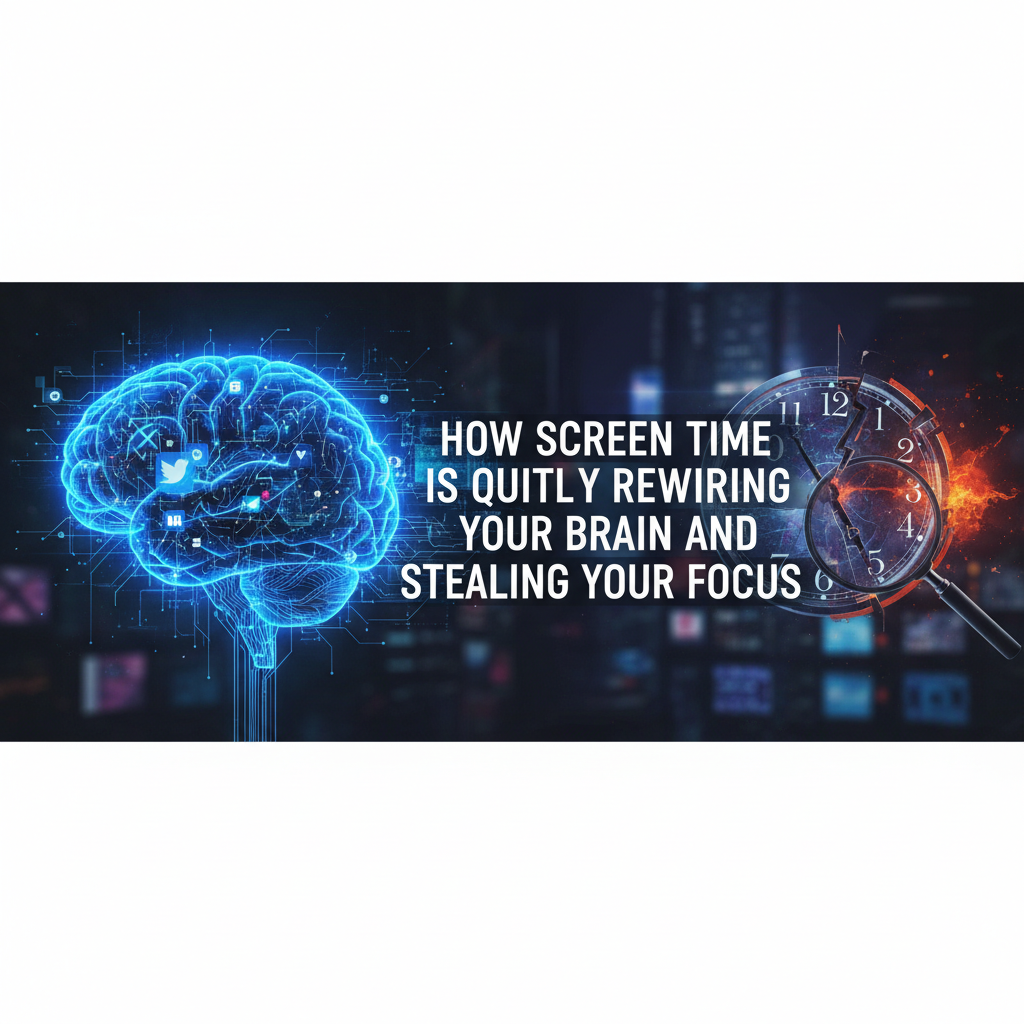
It’s not just about eye strain or “tech neck.” Emerging research suggests that our constant digital engagement is literally rewiring the way our brains process information, impacting our ability to focus, sustain attention, and even process emotions. This isn’t a doomsday prediction; it’s a call to understand the profound, subtle shifts happening in our cognitive landscape and how we can navigate them.
The Brain’s Plasticity: Why Screens Matter So Much
To understand the impact, we first need to grasp a fundamental concept: brain plasticity. Our brains are not fixed organs; they are incredibly adaptable, constantly changing and reorganizing neural connections in response to our experiences, habits, and environment. This means that what we repeatedly do – like engaging with screens – directly shapes our brain’s structure and function.
Think of your brain as a garden. What you water and nurture grows stronger. If you constantly water the “quick dopamine hit” path of endless scrolling and instant notifications, those neural pathways become superhighways. If you neglect the “sustained focus” path, it might start to look a little overgrown and less accessible.
The Digital Distraction Machine: How Our Focus Is Eroding
This is where the most noticeable impact of excessive screen time lies: on our focus and attention span.
- The Reward Cycle of Notifications: Every ding, buzz, and flashing red dot is designed to grab your attention. These notifications trigger a small burst of dopamine, the “feel-good” neurochemical. Our brains learn to crave this quick hit, making us constantly seek out new information and check our devices. This creates a feedback loop that trains our brains to be easily distracted and to constantly context-switch.
- The “Snackable Content” Trap: Social media feeds, short-form videos (like Reels and Shorts), and rapid-fire news headlines – digital content is often designed to be consumed in bite-sized pieces. While entertaining, this constant exposure to fragmented information discourages deep processing and sustained engagement. Our brains become accustomed to rapid shifts, making it harder to settle into a long book, a complex problem, or even a deep conversation.
- Multitasking: The Myth of Efficiency: Many of us believe we’re great at multitasking, but science tells a different story. Our brains don’t actually do multiple things simultaneously with equal efficiency. Instead, they rapidly switch between tasks. This constant switching, particularly when driven by screens, depletes cognitive resources, increases errors, and makes it harder to re-engage with the original task. It’s mentally exhausting and makes true deep focus a rare commodity.
- Reduced “Mind Wandering” and Creativity: Our brains need downtime – moments of boredom, quiet, or just undirected thought. This “default mode network” is crucial for creativity, problem-solving, self-reflection, and consolidating memories. When we fill every available moment with screen engagement (e.g., pulling out our phone in a queue), we deprive our brains of this essential processing time, potentially stunting our creative and reflective capacities.
Beyond Focus: Other Cognitive & Emotional Impacts
The effects of screen time extend beyond just attention:
- Memory Impairment: Some research suggests that relying heavily on external digital memory (e.g., constantly searching for information online) might weaken our brain’s ability to store and recall information internally. The “Google effect” describes how we’re better at remembering where to find information online than the information itself.
- Emotional Regulation Challenges: Especially in younger generations, excessive screen time has been linked to difficulties in emotional regulation. Constant exposure to curated, often unrealistic, online lives can lead to increased anxiety, lower self-esteem, and even symptoms of depression. The instant gratification inherent in digital interactions can also make it harder to cope with real-world frustrations or delayed rewards.
- Impact on Social Skills: While screens connect us globally, they can sometimes disconnect us locally. Over-reliance on digital communication can sometimes diminish our ability to read non-verbal cues, empathize, and engage in meaningful face-to-face interactions, which are crucial for healthy relationships.
- Sleep Disruption: The blue light emitted from screens suppresses melatonin production, a hormone essential for sleep. Using devices close to bedtime can disrupt our natural sleep cycles, leading to sleep deprivation, which, as we know, has a cascade of negative effects on mood, focus, and overall health.
The Good News: You Can Rewire Back!
The concept of brain plasticity is a double-edged sword: screens can rewire us, but we can also rewire back. Our brains are incredibly resilient. It takes conscious effort and consistent practice, but positive changes are absolutely possible.
Here’s how to reclaim your focus and nurture a healthier brain:
- Digital Detoxes & Designated Screen-Free Zones: Start small. Designate specific times (e.g., first hour of waking, last hour before bed) or places (e.g., dinner table, bedroom) as screen-free. Consider a full “digital detox” weekend if you’re feeling ambitious.
- Turn Off Notifications: This is huge! Most notifications are designed for the app’s benefit, not yours. Disable all non-essential notifications, allowing you to check apps on your schedule, not theirs.
- Practice Single-Tasking: When working or studying, close unnecessary tabs and apps. Focus on one task completely before moving to the next. Use the Pomodoro Technique (focused work for 25 minutes, then a short break) to train your attention span.
- Embrace Boredom: Let your mind wander. Sit quietly, look out a window, take a walk without your phone. These moments are vital for creativity and mental restoration.
- Prioritize Deep Work: Schedule dedicated blocks of time for tasks that require sustained focus, and treat them as non-negotiable appointments.
- Mindful Screen Use: Before picking up your phone, ask yourself: “Why am I doing this? What’s my intention?” This conscious pause can help break impulsive habits.
- Read Physical Books: Engage with long-form content that requires sustained attention. The tactile experience of a book can also be calming and grounding.
- Get Moving: Physical exercise boosts blood flow to the brain and enhances cognitive function, helping to counteract the negative effects of a sedentary, screen-heavy lifestyle.
- Protect Your Sleep: Implement a strict “no screens” rule at least 30-60 minutes before bedtime. Create a relaxing evening routine to signal to your brain that it’s time to wind down.
The Future of Our Minds
Screens are not inherently bad. They are powerful tools that, when used mindfully, can enrich our lives. The challenge lies in understanding their profound impact on our malleable brains and proactively taking steps to manage our digital habits. By making conscious choices, we can ensure that technology serves us, rather than our brains being constantly rewired to serve the demands of technology.
Reclaim your focus. Reclaim your attention. Reclaim your brain. The power is in your hands – literally.

 Chronic Sinusitis: Symptoms, Causes & Treatment
 Skull Base Surgery in Gurgaon: Solving Complex Cases Safely
 Oral Cancer Symptoms, Risks, and Prevention Tips Explained
 Choosing the Best Cochlear Implant Surgery Clinic in Gurgaon for Effective Hearing Restoration