
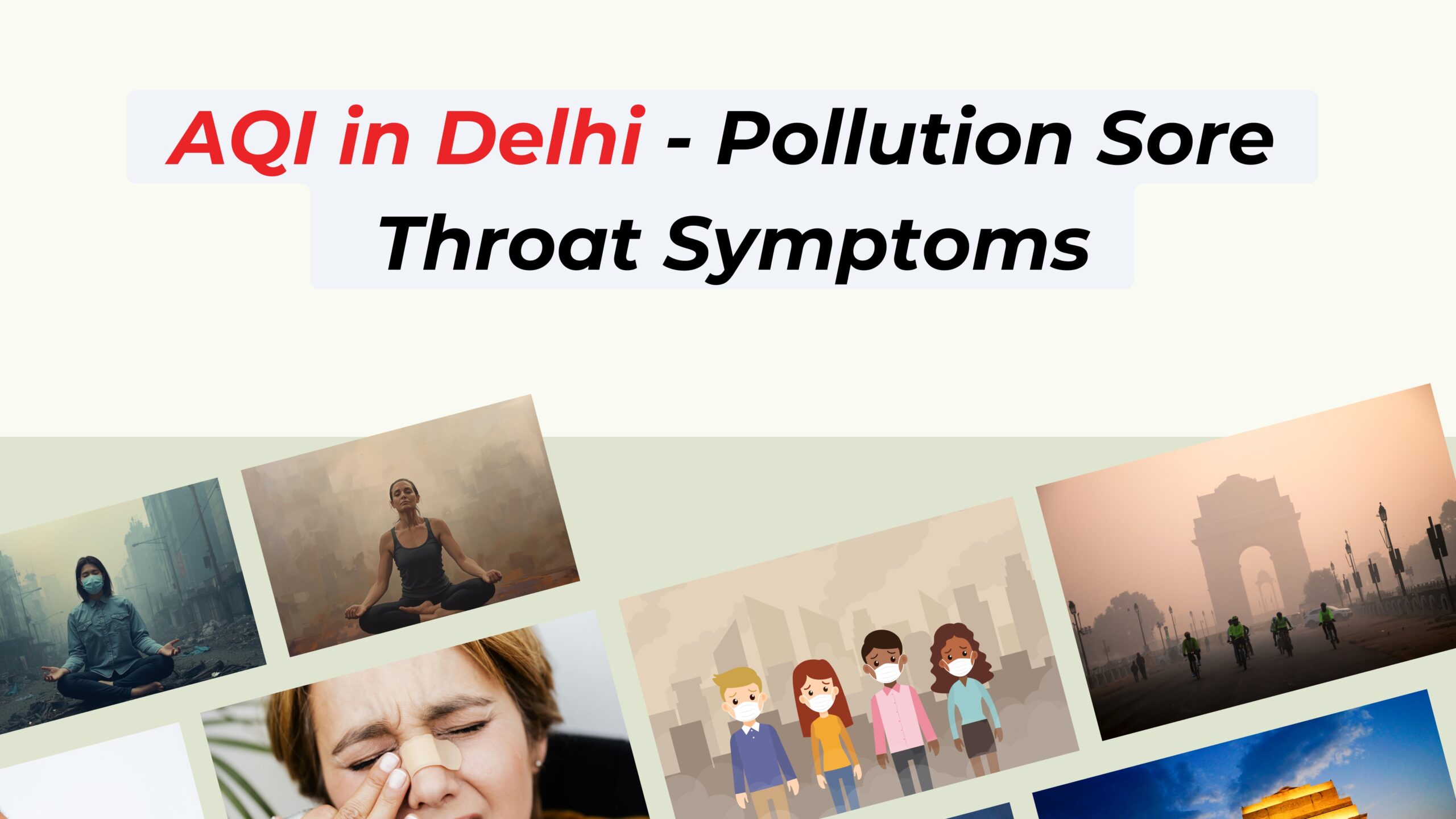
AQI in Delhi is the first thing you check before your feet even hit the floor at 7:00 AM on a typical winter morning. You wake up, but instead of feeling refreshed, you feel like you have swallowed a handful of sand. Your throat feels scratchy, dry, and irritated. You clear your throat—once, twice, three times—but that sticky feeling won’t go away. You look out the window, and the sun is just a pale orange disc struggling to pierce through a thick, grey blanket of smog.
You check your phone again to confirm what your throat is already telling you. The air quality is flashing red: 450. “Severe.”
You panic slightly. Is it a cold? Is it the flu? Is it COVID again? You take a sip of warm water, and it stings. You haven’t stepped out of your house, you haven’t eaten ice cream, and you haven’t been around sick people. So why does your throat feel like it’s on fire?
The answer is floating in the air around you. You are likely suffering from “Pollution Sore Throat,” a condition that has become as much a part of winter in Delhi NCR as gajar ka halwa and peanuts.
Living in Delhi, Gurgaon, Noida, or Faridabad means battling an invisible enemy every single day. The toxic air doesn’t just hurt your lungs; it attacks your upper respiratory tract first.
In this detailed guide, we are going to decode this condition. We will talk about why the pollution is destroying your throat, how to tell the difference between “Smog Throat” and a viral infection, and most importantly, practical, daily-life hacks to survive the pollution season without constantly popping antibiotics.

To understand why your throat hurts, you need to understand what you are breathing. When we say the air quality is “poor,” we aren’t just talking about dust. We are talking about a toxic cocktail.
The smog in Delhi NCR is a mixture of:
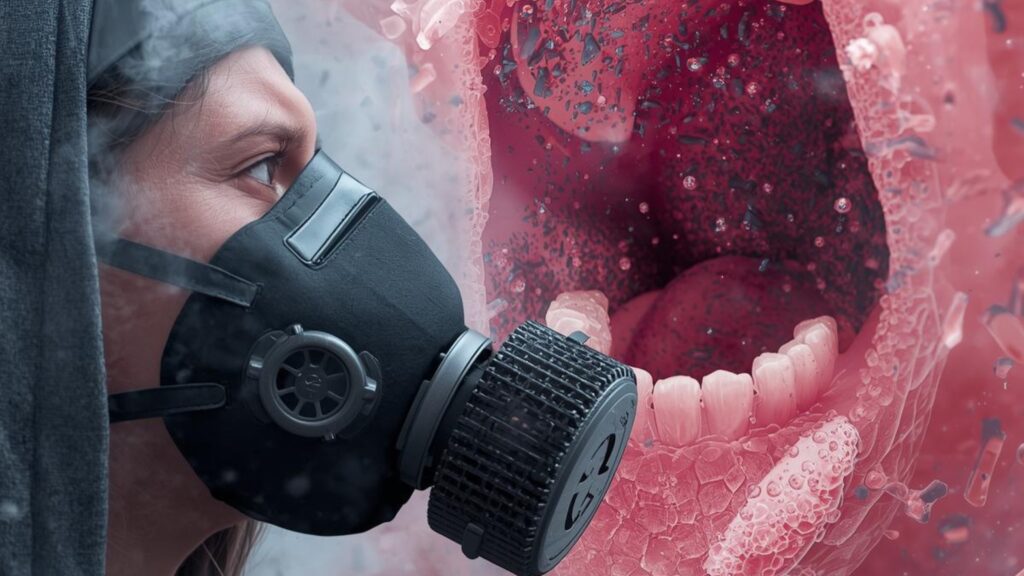
Think of your throat (pharynx) as a hallway lined with a soft, pink velvet carpet (the mucous membrane). This carpet is wet and sticky to trap dust. When you breathe in Delhi’s polluted air, millions of these sharp, jagged PM2.5 particles bombard this soft carpet.
This is why, even if you are perfectly healthy, a 15-minute auto-rickshaw ride in Gurgaon or a walk in Connaught Place can leave you with a raging sore throat by evening.
This is the most common question patients ask at Medicon Multispeciality Clinic. “Doctor, do I need antibiotics?”
Because the symptoms overlap, it is easy to get confused. Treating a pollution allergy with antibiotics is useless and harmful. Here is how to tell the difference in simple words.
The Medicon Advice: If you have fever and yellow mucus, see a doctor. If you just have a dry, scratchy throat and burning eyes when the air quality is bad, focus on pollution protection first.
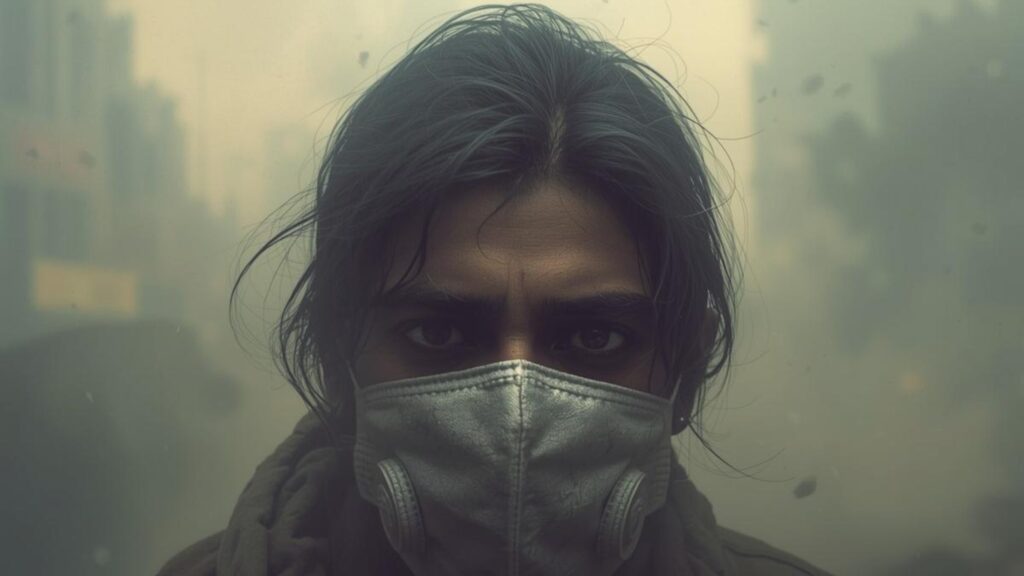
We cannot change the air outside immediately. But we can change how we live. You don’t have to lock yourself in a bunker. Here are practical changes you can make to your daily routine in Delhi NCR to save your throat.
For years, doctors said, “Morning walks are healthy.” In Delhi’s winter, this advice is dangerous.
If you drive to work in Gurgaon or Delhi, use your car’s climate control wisely.
You spend 8 hours sleeping. If your bedroom air is toxic, your throat never gets a chance to heal.

You don’t always need a pharmacy. Your kitchen has potent weapons against Pollution Sore Throat. Here is what you should be eating and drinking during the smog season.
Our elders were right. Jaggery is excellent for the respiratory system.
The “Golden Milk” (Haldi Doodh) is globally famous now, but it is a Delhi staple.
This is the single most effective thing you can do.
Pollution dehydrates you. If your throat is dry, the particles stick. If it is moist, they slide off.
Sometimes, the pollution levels are just too high, and your sensitivity is too severe. Home remedies aren’t enough. Your throat hurts constantly, your voice is hoarse, and you are miserable.
This is when you need medical intervention. At Medicon Multispeciality Clinic, we see thousands of patients with “Smog Throat.” Here is how we treat it medically.
Often, the sore throat is caused by “Post-Nasal Drip.” The pollution irritates your nose, your nose makes excess mucus, and that mucus drips down the back of your throat, causing pain.
Since pollution triggers an allergic-like reaction, simple anti-allergy tablets (like Levocetirizine or Fexofenadine) can stop the itching and sneezing. However, these should only be taken under a doctor’s advice as some cause drowsiness.
In severe cases where the lining of the nose and throat is dangerously swollen, blocking breathing, we may prescribe mild corticosteroid sprays. These reduce inflammation instantly. They are safe when used locally and do not have the side effects of oral steroids.
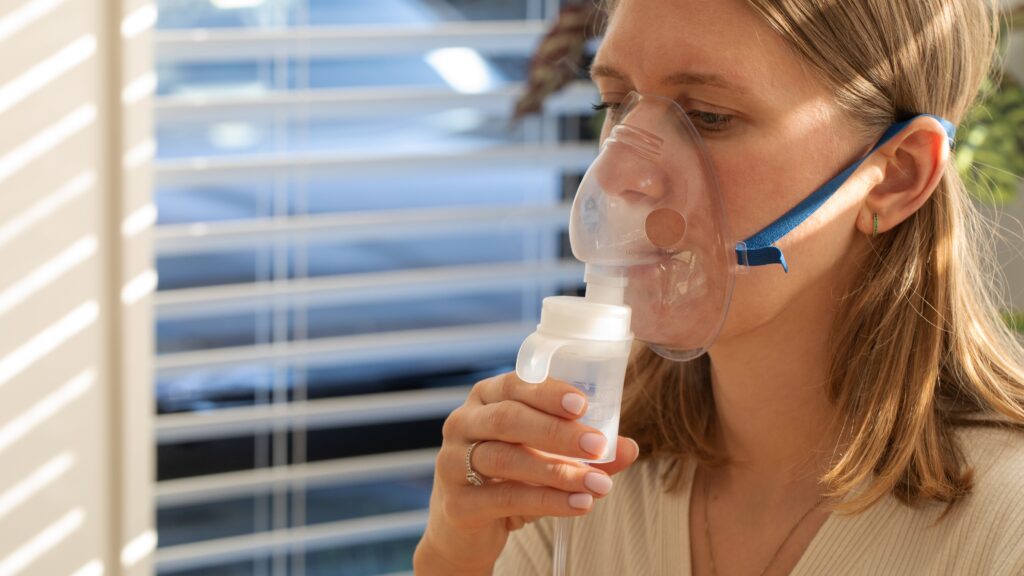
For patients with a history of asthma or bronchitis, pollution can trigger wheezing. Nebulization with bronchodilators opens up the airways immediately.

You might think, “It’s just a sore throat, I’ll live.”
But in Delhi NCR, a persistent pollution sore throat is a warning sign. It means your body’s first line of defense is failing. If you ignore it, the particles move deeper.
Treating your sore throat is not just about comfort; it is about stopping the particles at the gate. By managing your nose and throat health, you protect your lungs and heart.

Living in Delhi, Gurgaon, or anywhere in the NCR region right now is a challenge. The severe AQI in Delhi is a reality we cannot wish away. But we refuse to be victims of it.
You do not have to live with a scratchy, painful throat for four months of the year. You do not have to accept the “smog cough” as your new normal.
By understanding the science of pollution, distinguishing it from infections, and adopting a proactive lifestyle—wearing masks, using air purifiers, steaming daily, and using the right medical support—you can thrive even in the winter smog.
Medicon Multispeciality Clinic is Here for You
If your sore throat persists for more than 2 weeks, if you have trouble breathing, or if your voice remains hoarse, do not self-medicate. You need an expert evaluation to ensure there is no deeper damage.
Medicon Multispeciality Clinic in Gurgaon is your partner in respiratory health. Our ENT specialists are experts in treating pollution-related ailments. We don’t just give you a pill; we give you a comprehensive plan to “pollution-proof” your life.
Don’t let the smog silence you. Take a deep breath (of purified air), sip your turmeric milk, and take control of your health today.
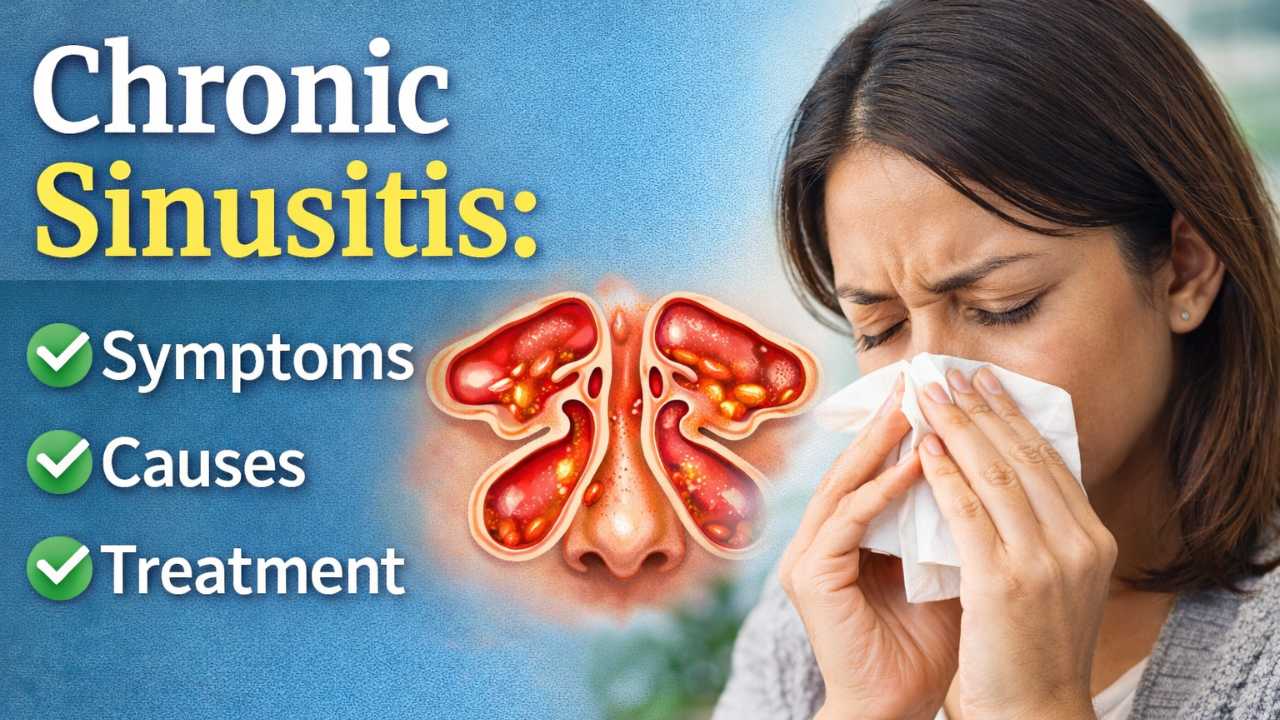 Chronic Sinusitis: Symptoms, Causes & Treatment
 Skull Base Surgery in Gurgaon: Solving Complex Cases Safely
 Oral Cancer Symptoms, Risks, and Prevention Tips Explained
 Choosing the Best Cochlear Implant Surgery Clinic in Gurgaon for Effective Hearing Restoration