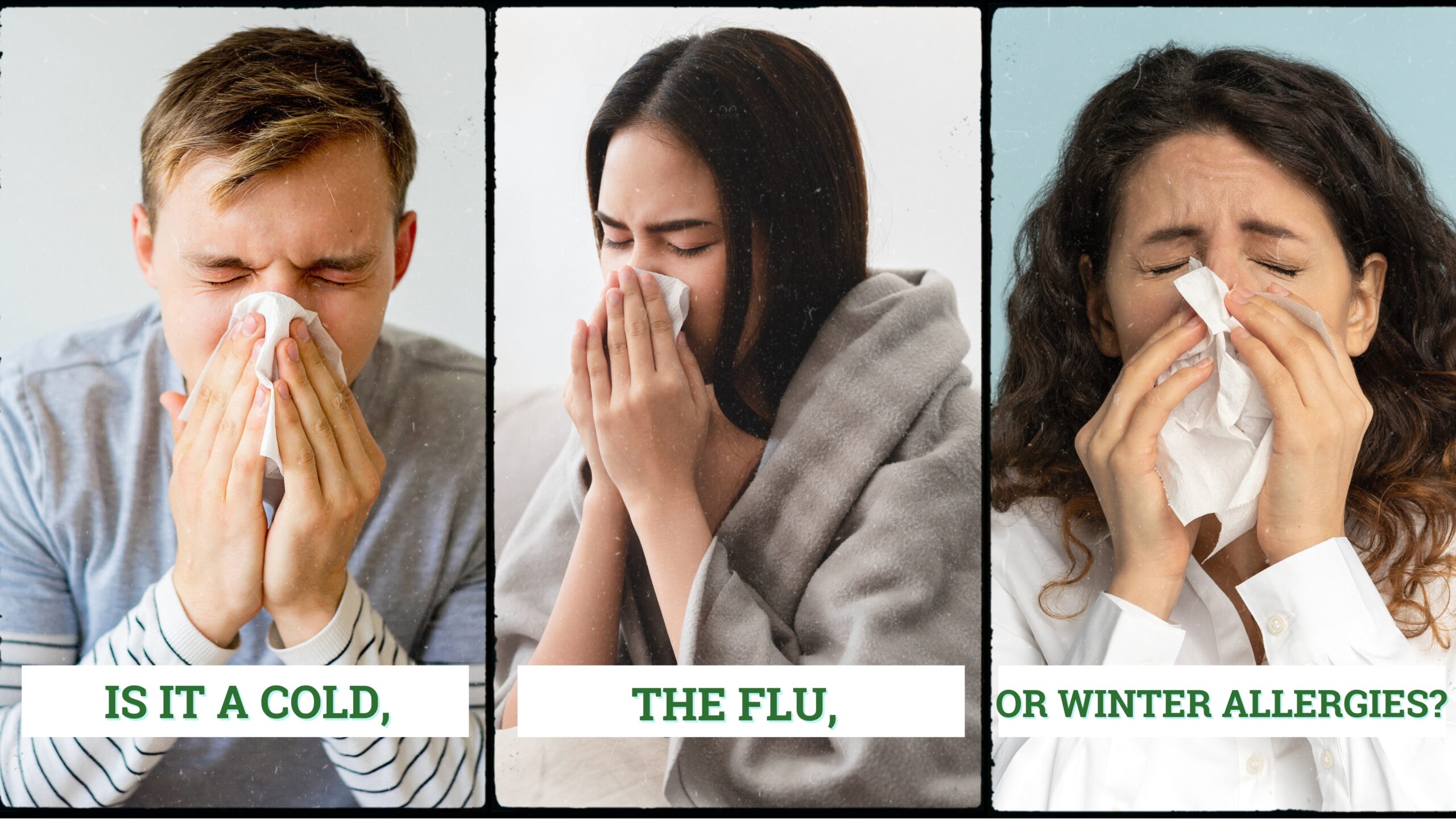
Is It a Cold, the Flu, or Winter Allergies? The Ultimate Guide to Decoding Your Symptoms

0 Comments

Is It a Cold, the Flu, or Winter Allergies? – It starts with a tickle in the back of your throat. Then comes the first sneeze. By the next morning, you are waking up with a stuffy nose, a heavy head, and a general feeling of fatigue. You look out the window at the grey winter sky and sigh. You’ve caught “something.”

But what is that “something”?

In the summer, a runny nose usually means hay fever. In the rainy season, we worry about viral fevers. But winter is the season of confusion. It is the time when three distinct health conditions—the common cold, the flu (influenza), and winter allergies—collide. They all share a remarkably similar set of symptoms. They all make you feel miserable. They all affect your Ear, Nose, and Throat (ENT) health. Yet, they are completely different beasts requiring completely different treatments.

Treating the flu with allergy medicine won’t work. Ignoring winter allergies thinking it’s just a “lingering cold” can lead to chronic sinusitis. And mistaking a bacterial sinus infection for a viral cold can delay necessary antibiotic treatment.

This guide is your diagnostic roadmap. We will dissect the anatomy of these winter ailments. We will explore the hidden world of indoor allergens like dust mites and mold. We will look at the “Rule of Thumb” indicators like fever, mucus color, and symptom duration.

By the end of this article, you will be able to decode your body’s signals. And for those in Delhi who need a definitive medical diagnosis, we will connect you with the best ENT specialists at Medicon Multispeciality Clinic.


Is It a Cold, the Flu, or Winter Allergies?

Chapter 1: The Common Cold – The Winter Visitor

The common cold is exactly that—common. Adults average 2-3 colds per year, mostly in the winter, while children can have 8 or more. It is a viral infection of your upper respiratory tract (your nose and throat).Image of anatomy of upper respiratory tract

The Culprit: The Rhinovirus

While over 200 viruses can cause a cold, the rhinovirus is the most frequent offender. As discussed in previous blogs, this virus thrives in cooler temperatures, replicating faster inside a cold human nose than a warm one.

The Hallmark: Gradual Onset

This is your first clue. A cold rarely hits you like a freight train. It is a slow burn.

  • Day 1-2: You feel a bit “off.” You might have a minor scratchy throat or mild fatigue.
  • Day 3-4: The peak. This is when the runny nose turns into a stuffy nose. The mucus changes from clear to thick and cloudy. You might have a mild cough and low-grade fever.
  • Day 7-10: The resolution. The symptoms fade, though a dry cough might linger.

Key Symptoms of a Cold:

  • Runny or Stuffy Nose: The most prominent symptom.
  • Sore Throat: Usually the first sign, lasting 1-2 days.
  • Cough: Mild to moderate.
  • Sneezing: Frequent.
  • Low-grade Fever: Rare in adults, but possible. Common in children.
  • Mild Body Aches: You feel tired, but you can usually still get out of bed and function.

The Treatment: There is no cure. Antibiotics do not work on viruses. Treatment is rest, hydration, and managing symptoms (decongestants, pain relievers).


Is It a Cold, the Flu, or Winter Allergies? The Ultimate Guide to Decoding Your Symptoms
https://mediconmultispecialityclinic.com/index.php/2025/11/22/is-it-a-cold-the-flu-or-winter-allergies-the-ultimate-guide-to-decoding-your-symptoms/

Chapter 2: The Flu (Influenza) – The Heavy Hitter

The flu is not just a “bad cold.” It is a specific, highly contagious respiratory illness caused by influenza viruses. It is systemic, meaning it affects your whole body, not just your nose and throat.

The Hallmark: Sudden, Violent Onset

Unlike the slow arrival of a cold, the flu hits you fast. You might wake up feeling fine and by lunch be bedridden. Patients often describe it as feeling like they were “hit by a truck.”

Key Symptoms of the Flu:

  • High Fever: A definitive sign. Temperatures often spike over 100°F (38°C) and can last 3-4 days.
  • Severe Body Aches: Your muscles and joints hurt deeply. Even your skin might feel sensitive to the touch.
  • Extreme Fatigue: This is profound exhaustion. It can persist for weeks even after the infection clears.
  • Dry Cough: Can be severe and painful.
  • Headache: Often intense.
  • Chills and Sweats.

The Danger: While a cold is an annoyance, the flu can be dangerous, leading to pneumonia, especially in young children, the elderly, and those with compromised immune systems.

The Treatment: Antiviral drugs (like Tamiflu) can shorten the duration if taken within the first 48 hours. Otherwise, strict rest and fluids are mandatory.


Chapter 3: Winter Allergies – The Silent Mimic

This is the category that confuses people the most. “How can I have allergies?” they ask. “There is no pollen! The flowers aren’t blooming!”

It is true that seasonal allergies (Hay Fever) caused by pollen drop in the winter. However, winter allergies are caused by indoor triggers.

In the winter, we seal our homes tight to keep the cold out. We close the windows and turn on the heaters. This traps us inside with high concentrations of allergens, and the heating systems blow these particles into the air we breathe 24/7.

The Big Three Winter Triggers

  1. Dust Mites: These microscopic creatures live in bedding, carpets, and upholstered furniture. They thrive in the humid micro-environments of our beds. When the heater turns on, dust mite waste (a potent allergen) becomes airborne.
  2. Mold Spores: Winter is damp. Condensation on windows, bathrooms, and basements promotes mold growth. Mold spores are invisible and easily inhaled.
  3. Pet Dander: In the winter, our pets spend more time indoors with us. The concentration of cat dander and dog dander in the air skyrockets during these months.

The Hallmark: “The Itch” and “The Never-Ending Cold”

If you have a “cold” that has lasted for 3 weeks, 4 weeks, or all winter long, it is not a cold. Viruses have a life cycle; allergies last as long as you are exposed to the trigger.

Key Symptoms of Winter Allergies:

  • Itchy, Watery Eyes: This is the biggest differentiator. Colds and flu rarely cause itchy eyes.
  • Itchy Throat/Ears: A tingling sensation inside the throat or ears.
  • Clear, Watery Mucus: Unlike the thick yellow mucus of an infection, allergy mucus tends to remain thin and clear (like water).
  • Sneezing: Often in rapid-fire bursts (paroxysms).
  • Dark Circles Under Eyes: Known as “allergic shiners,” caused by chronic nasal congestion.
  • NO Fever: Allergies never, ever cause a fever.

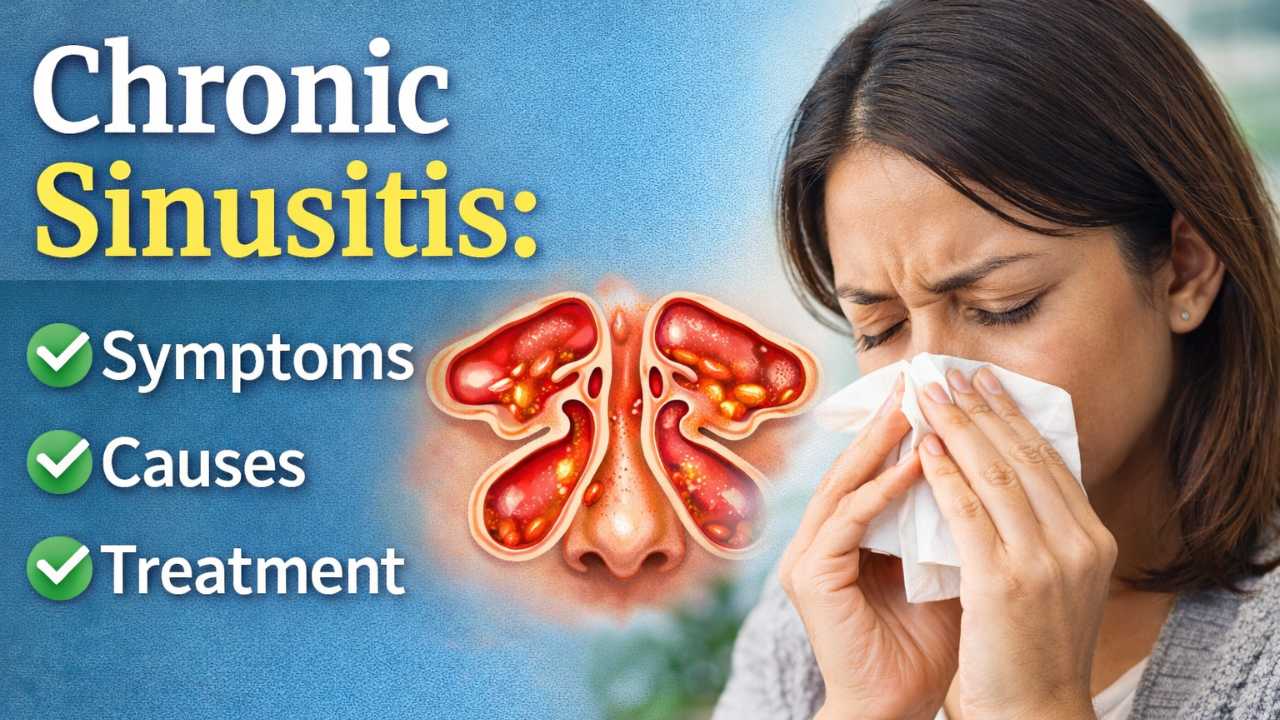
Chapter 4: The Complication – Sinusitis (Sinus Infection)

Here is where it gets tricky. Both a cold and winter allergies can lead to sinusitis.

Your sinuses are air-filled pockets behind your forehead, eyes, and cheeks. When you have a cold or allergies, the nasal lining swells, blocking the drainage holes of the sinuses. Fluid gets trapped inside. If bacteria grow in that stagnant fluid, you develop a bacterial sinus infection.Image of sinus anatomy healthy vs inflamed

Key Symptoms of Sinusitis:

  • Facial Pain/Pressure: Pain in the forehead, cheeks, or behind the eyes that gets worse when you bend over.
  • Thick, Discolored Mucus: Yellow or greenish discharge.
  • Post-Nasal Drip: Mucus dripping down the back of the throat, causing a cough at night.
  • Bad Breath: Caused by the infected mucus.
  • Toothache: Pain in the upper teeth (caused by sinus pressure pressing on nerves).

The Treatment: Viral sinusitis resolves on its own. Bacterial sinusitis often requires antibiotics prescribed by an ENT specialist.


Chapter 5: The Master Key – How to Tell the Difference

Still confused? Use this “Symptom Decoder” to check your condition.

1. The Fever Check

  • High Fever (100°F+): It is likely the Flu.
  • Mild Fever or None: It could be a Cold.
  • Absolutely No Fever: It is likely Allergies.

2. The “Itch” Factor

  • Intense Itching (Eyes, Nose, Throat): This is the hallmark of Allergies. Viruses cause pain (soreness), but rarely itching.

3. The Body Ache Test

  • Severe, All-Over Aches: Classic Flu.
  • Mild Aches: Possible with a Cold.
  • No Aches: Allergies generally don’t hurt your muscles.

4. The Mucus Color Guide

  • Clear & Watery: Usually Allergies (or early stage cold).
  • Thick, Cloudy: A developing Cold.
  • Yellow/Green: Indicates an infection (Cold or Sinusitis), implying immune system activity.

5. The Duration (Timeline)

  • Abrupt onset, lasts 5-7 days: Flu.
  • Gradual onset, lasts 7-10 days: Cold.
  • Lasts weeks or months: Winter Allergies.
  • Lasts 10+ days and gets worse: Sinusitis.

Chapter 6: Treatment Options – Choosing the Right Weapon

Using the wrong medication can be dangerous or simply ineffective. Here is a breakdown of how to treat each, but remember: Self-medication has limits.

Treating the Cold & Flu

  • Rest: Essential.
  • Hydration: Water, broth, herbal tea.
  • Pain Relievers: Acetaminophen or Ibuprofen for fever and aches.
  • Decongestants: Oral or nasal (use nasal sprays for max 3 days).
  • Cough Suppressants.

Treating Winter Allergies

  • Avoidance: Wash bedding in hot water weekly (kills dust mites), use HEPA filters, keep pets out of the bedroom.
  • Antihistamines: Oral pills (like Cetirizine or Loratadine) block the immune reaction.
  • Nasal Steroid Sprays: The gold standard for reducing allergic inflammation in the nose.
  • Saline Rinse (Neti Pot): Flushes out the allergens physically.

Treating Sinusitis

  • Steam Inhalation.
  • Saline Irrigation.
  • Antibiotics: ONLY if an ENT specialist confirms it is bacterial. Taking antibiotics for a viral cold or allergies contributes to antibiotic resistance and kills your gut health.

Chapter 7: Prevention – Your Winter Wellness Strategy

You don’t have to succumb to the winter misery. You can fortify your environment.

  1. Wash Your Hands: It remains the #1 way to prevent the cold and flu. Viruses live on doorknobs and phones.
  2. Control Indoor Air: Since winter allergies are caused by indoor triggers, use a HEPA air purifier. It traps dust mites, mold spores, and pet dander.
  3. Manage Humidity: Dry air worsens colds, but too much humidity promotes mold and dust mites. Aim for 40-50% humidity indoors.
  4. Boost Immunity: Vitamin D, Vitamin C, and Zinc supplements (under doctor supervision) can help your body fight off viral invaders.
  5. Get the Flu Shot: It is the single most effective way to prevent severe influenza.

Conclusion: Don’t Guess With Your Health

Winter symptoms are tricky. A “persistent cold” could actually be mold allergies. A “sinus headache” could be a deviated septum aggravated by the flu. A “sore throat” could be strep throat requiring immediate attention.

Guessing leads to prolonged suffering. Misusing antibiotics weakens your body. Ignoring symptoms leads to chronic conditions like sinusitis or bronchitis.

If your symptoms are severe, if they last longer than 10 days, or if you are unsure whether you are dealing with an infection or an allergy, you need a specialist.

Connect with Medicon Multispeciality Clinic

https://mediconmultispecialityclinic.com/

If you are in Delhi and struggling to decode your winter symptoms, Medicon Multispeciality Clinic is your partner in health.

As a premier ENT Clinic, we specialize in the subtle art of diagnosis. We don’t just treat the symptom; we find the source.

  • Allergy or Infection? Our specialists use advanced Nasal Endoscopy to look inside your nose. The color and texture of the nasal lining often tell us instantly if it’s allergic (pale/boggy) or infected (red/inflamed).
  • Specific Allergy Testing: If we suspect winter allergies, we offer comprehensive allergy testing to pinpoint exactly what is triggering you—be it dust mites, mold, or pets—so you can create a targeted avoidance plan.
  • Sinus Care: For those with chronic sinusitis, we offer state-of-the-art management, from medical therapy to minimally invasive drainage procedures if necessary.

Stop suffering through the winter. Stop relying on over-the-counter guesswork. Visit Medicon Multispeciality Clinic today for a precise diagnosis and a personalized treatment plan that will have you breathing freely again.
Share: Facebook Pinterest Linkedin Tweet
Categories:

Leave a Reply

Your email address will not be published. Required fields are marked *

Related Posts

Microear Surgery in Gurgaon Microear Surgery in Gurgaon
Many ear problems do not announce themselves loudly. They begin with small signs that are
Sinus Surgery When Medicines Fail: How Functional Endoscopic Sinus Surgery in Gurgaon Helps Chronic Sinusitis and Recurrent Infections
Many people in Gurgaon suffer from long-term sinus problems that never seem to fully heal.
Sinusitis Is So Common in Gurgaon Why Sinusitis Is So Common in Gurgaon: Pollution, Lifestyle & What ENT Doctors Recommend
Sinusitis Is So Common in Gurgaon that many residents consider nasal blockage and headaches part
Mental Health Why Micro-Habits Beat Big Resolutions for Mental Health in 2026
Mental Health has become a major concern for people living in Gurgaon. Fast work culture,